Blue Economy Webinar: Tackling Ocean Plastic Waste in the Seas of East Asia
RELATED PUBLICATIONS
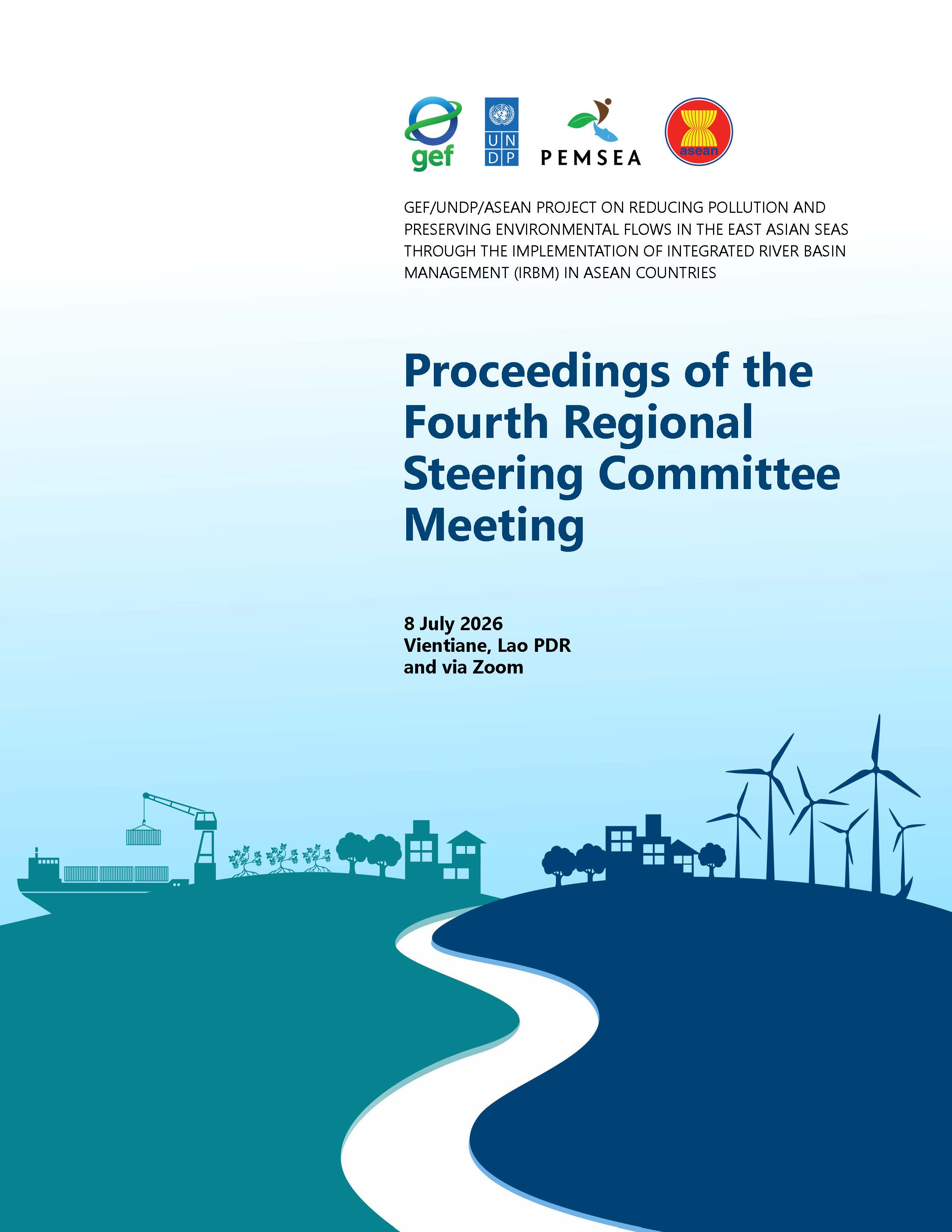
Proceedings of the Fourth RSC Meeting of the IRBM Project
The Fourth Regional Steering Committee (RSC) Meeting of the GEF/UNDP/ASEAN Project on Reducing Pollution and Preserving Environmental Flows in the East Asian Seas through the Implementation of Integrated River Basin Management (IRBM) in ASEAN countries was held on 08 July 2026 in Vientiane, Lao PDR, in conjunction with the 26th Meeting of the ASEAN Working Group on Water Resources Management (AWGWRM). Co-chaired by Mr. Oudomsack Philavong, AWGWRM Chairperson, and Mr. Gerd Trogemann of UNDP Bangkok Regional Hub, the meeting brought together 55 participants from ASEAN Member States (AMS), the ASEAN Secretariat, UNDP, PEMSEA Resource Facility (PRF), and the East Asian Seas Executive
Committee, both in-person and online.The Meeting reviewed implementation progress of the six participating ASEAN Member States and the regional component, including key achievements, lessons learned, implementation challenges, co-financing delivery, and planned next steps. The RSC also reviewed progress in implementing the approved Mid-Term Review (MTR) Management Response, the preparation of the 2026 Project Implementation Report (PIR), the planned activities for the third and fourth quarters of 2026, and the proposed 2027 Annual Work Plan and Budget, including the proposed no-cost extension of the Project.
Proceedings of the Eighteenth East Asian Seas Partnership Council Meeting
The 18th East Asian Seas (EAS) Partnership Council (PC) Meeting was held on July 22-23, 2026 at Aloft Novena Singapore, 16 Ah Hood Rd in Singapore.
Onsite participants of the meeting included the EAS PC Chair and Co-Chair; the Technical Session Chair and Co-Chair; the Intergovernmental Session Chair and Co-Chair; the Executive Director of the PEMSEA Resource Facility (PRF); Country Partners (CPs) from Cambodia, China, Indonesia, Japan, Lao PDR, Philippines, Republic of Korea (RoKorea), Singapore, Timor-Leste, and Viet Nam; Non-Country Partners (NCPs) from the ASEAN Center for Biodiversity (ACB), Korea Institute for Ocean Science and Technology (KIOST), Korea Maritime Institute (KMI), Korea Marine Environment Management Corporation (KOEM), National Marine Hazard Mitigation Service (NMHMS), Ocean Policy Research Institute – Sasakawa Peace Foundation (OPRI-SPF), Oil Spill Response Limited (OSRL), and the PEMSEA Network of Local Governments (PNLG). Observers include the Coordinating Body on the Seas of East Asia (COBSEA) and the PEMSEA Network of Learning Centers (PNLC). The meeting also welcomed its first-ever youth delegate, Dr. Kenny Pang of the Singapore Institute of Technology.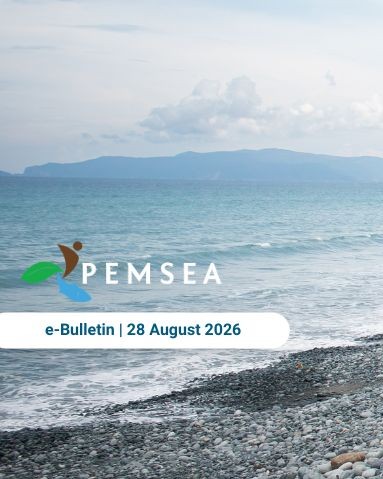
PEMSEA eBulletin - August 2026
In the Philippines, multi-sectoral stakeholders in Bicol and Cagayan Valley provided inputs for the local implementation of the PRICELESS Project and the management of the Philippine Rise Marine Resource Reserve (PRMRR). At the 4th ASEAN Blue Economy Forum, PEMSEA called for concrete investments to address the triple planetary crisis while protecting marine biodiversity and coastal livelihoods.
In Busan, the upcoming 2026 PNLG–PNLC Joint Learning Forum Technical Session will examine nature-based, network-driven pathways for local blue economies, including approaches to coastal resilience and sustainable economic opportunities from marine and coastal ecosystems.
Meanwhile, the GEF/UNDP/ASEAN IRBM Project brought together representatives from six ASEAN Member States for a regional workshop on environmental monitoring and reporting in support of IRBM program development and implementation. Participants also visited sites in the Ciliwung River Basin to examine practical applications of environmental monitoring, including industrial wastewater treatment and the Online Realtime Waste Water Quality Monitoring System (SPARING).
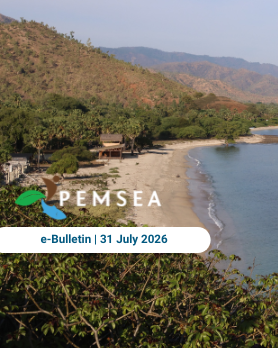
PEMSEA eBulletin - July 2026
Across the region, PEMSEA partners came together to reflect on progress, strengthen partnerships, and chart the path forward for a resilient East Asian Seas region. At the center of these conversations was the 18th East Asian Seas Partnership Council Meeting in Singapore, where PEMSEA Country and Non-Country Partners reviewed key achievements, agreed on strategic priorities, and reaffirmed a shared vision for healthy coasts, resilient communities, and sustainable blue economies. The field visit to Singapore’s Sungei Buloh Wetland Reserve offered participants an opportunity to see firsthand how conservation efforts and nature-based solutions contribute to resilient coastal ecosystems.
Collaboration extended well beyond the EAS Partnership Council Meeting. This month saw the approval of revised pilot projects in three Philippine sites and continued preparations for implementation in Timor-Leste under the MOF/PEMSEA Marine Plastics ODA Project, bringing local governments one step closer to turning plans into action. The GEF/UNDP/ASEAN Integrated River Basin Management (IRBM) Project also marked several milestones, convening regional dialogues on river basin governance, holding its 4th Regional Steering Committee Meeting, and advancing pilot project development through field missions and local engagement.
Taken together, these stories reflect a busy July and show how regional cooperation is translated into practical solutions—through partnerships, informed decision-making, and sustained action on the ground.
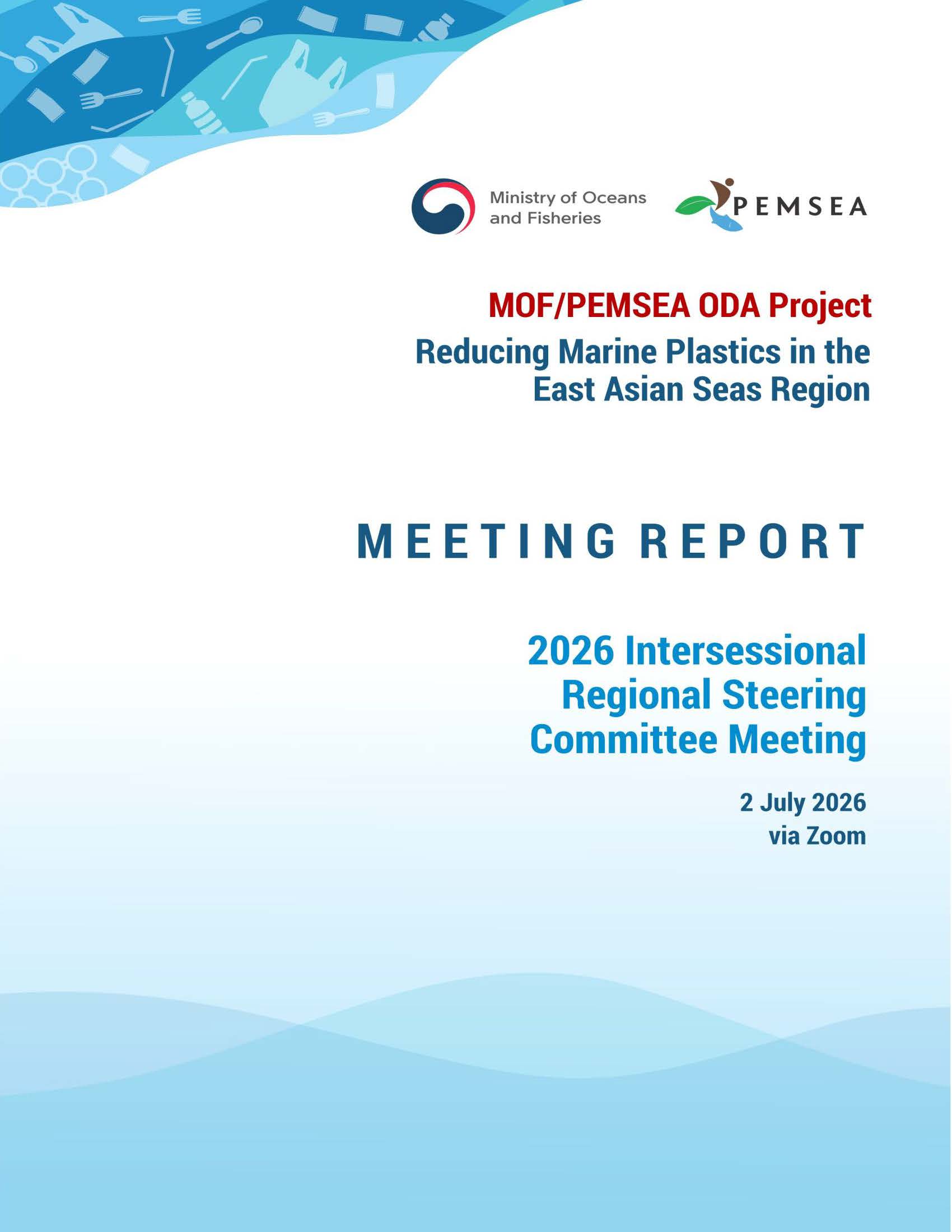
MOF/PEMSEA Marine Plastics ODA Project 2026 Intersessional Regional Steering Committee Meeting
The 2026 Intersessional Regional Steering Committee (RSC) Meeting of the MOF/PEMSEA ODA Project on Reducing Marine Plastics in the East Asian Seas Region was held on 2 July 2026 in PEMSEA Office and via Zoom. The objective of the meeting was to report the status of the procurement process for the pilot projects in the Philippines, to seek approval for changes in Dipolog City's pilot project design and budget and to provide an update on project implementation in Timor-Leste, including the hiring of consultants and the preparation of pilot project designs and the MEP Program in Dili, Manatuto, Liquica and Atauro.
The 2nd Intersessional RSC Meeting was a significant step to ensure that the pilot project implementation in the Philippines remains within the agreed timeline—as reported during the 3rd RSC Meeting—and to realign Dipolog City's design and budget to efficiently and effectively address the City's marine plastic issues. Specifically, this aims to urgently improve household waste collection and transport to material recovery facilities and the sanitary landfill.In addition, the meeting marked the start of the full implementation of the project in Timor-Leste, bolstered by added support through the hiring of the National Coordinator and National Technical Advisor. This will hasten coordination among the national and local governments, various stakeholders, and local communities.
The meeting was organized in hybrid format: at the conference room of PEMSEA Office which was chaired by Mr. Eddie Abugan, Division Chief, Project Management Division, FASPS, DENR, Philippines and through Zoom for the online participants.
Blue Economy Webinar: Building a Sustainable Seafood Supply Chain in Asia
RELATED PUBLICATIONS
-
Proceedings of the Fourth RSC Meeting of the IRBM Project
The Fourth Regional Steering Committee (RSC) Meeting of the GEF/UNDP/ASEAN Project on Reducing Pollution and Preserving Environmental Flows in the East Asian Seas through the Implementation of Integrated River Basin Management (IRBM) in ASEAN countries was held on 08 July 2026 in Vientiane, Lao PDR, in conjunction with the 26th Meeting of the ASEAN Working Group on Water Resources Management (AWGWRM). Co-chaired by Mr. Oudomsack Philavong, AWGWRM Chairperson, and Mr. Gerd Trogemann of UNDP Bangkok Regional Hub, the meeting brought together 55 participants from ASEAN Member States (AMS), the ASEAN Secretariat, UNDP, PEMSEA Resource Facility (PRF), and the East Asian Seas Executive
Committee, both in-person and online.The Meeting reviewed implementation progress of the six participating ASEAN Member States and the regional component, including key achievements, lessons learned, implementation challenges, co-financing delivery, and planned next steps. The RSC also reviewed progress in implementing the approved Mid-Term Review (MTR) Management Response, the preparation of the 2026 Project Implementation Report (PIR), the planned activities for the third and fourth quarters of 2026, and the proposed 2027 Annual Work Plan and Budget, including the proposed no-cost extension of the Project.
-
Proceedings of the Eighteenth East Asian Seas Partnership Council Meeting
The 18th East Asian Seas (EAS) Partnership Council (PC) Meeting was held on July 22-23, 2026 at Aloft Novena Singapore, 16 Ah Hood Rd in Singapore.
Onsite participants of the meeting included the EAS PC Chair and Co-Chair; the Technical Session Chair and Co-Chair; the Intergovernmental Session Chair and Co-Chair; the Executive Director of the PEMSEA Resource Facility (PRF); Country Partners (CPs) from Cambodia, China, Indonesia, Japan, Lao PDR, Philippines, Republic of Korea (RoKorea), Singapore, Timor-Leste, and Viet Nam; Non-Country Partners (NCPs) from the ASEAN Center for Biodiversity (ACB), Korea Institute for Ocean Science and Technology (KIOST), Korea Maritime Institute (KMI), Korea Marine Environment Management Corporation (KOEM), National Marine Hazard Mitigation Service (NMHMS), Ocean Policy Research Institute – Sasakawa Peace Foundation (OPRI-SPF), Oil Spill Response Limited (OSRL), and the PEMSEA Network of Local Governments (PNLG). Observers include the Coordinating Body on the Seas of East Asia (COBSEA) and the PEMSEA Network of Learning Centers (PNLC). The meeting also welcomed its first-ever youth delegate, Dr. Kenny Pang of the Singapore Institute of Technology. -
PEMSEA eBulletin - August 2026
In the Philippines, multi-sectoral stakeholders in Bicol and Cagayan Valley provided inputs for the local implementation of the PRICELESS Project and the management of the Philippine Rise Marine Resource Reserve (PRMRR). At the 4th ASEAN Blue Economy Forum, PEMSEA called for concrete investments to address the triple planetary crisis while protecting marine biodiversity and coastal livelihoods.
In Busan, the upcoming 2026 PNLG–PNLC Joint Learning Forum Technical Session will examine nature-based, network-driven pathways for local blue economies, including approaches to coastal resilience and sustainable economic opportunities from marine and coastal ecosystems.
Meanwhile, the GEF/UNDP/ASEAN IRBM Project brought together representatives from six ASEAN Member States for a regional workshop on environmental monitoring and reporting in support of IRBM program development and implementation. Participants also visited sites in the Ciliwung River Basin to examine practical applications of environmental monitoring, including industrial wastewater treatment and the Online Realtime Waste Water Quality Monitoring System (SPARING).
-
PEMSEA eBulletin - July 2026
Across the region, PEMSEA partners came together to reflect on progress, strengthen partnerships, and chart the path forward for a resilient East Asian Seas region. At the center of these conversations was the 18th East Asian Seas Partnership Council Meeting in Singapore, where PEMSEA Country and Non-Country Partners reviewed key achievements, agreed on strategic priorities, and reaffirmed a shared vision for healthy coasts, resilient communities, and sustainable blue economies. The field visit to Singapore’s Sungei Buloh Wetland Reserve offered participants an opportunity to see firsthand how conservation efforts and nature-based solutions contribute to resilient coastal ecosystems.
Collaboration extended well beyond the EAS Partnership Council Meeting. This month saw the approval of revised pilot projects in three Philippine sites and continued preparations for implementation in Timor-Leste under the MOF/PEMSEA Marine Plastics ODA Project, bringing local governments one step closer to turning plans into action. The GEF/UNDP/ASEAN Integrated River Basin Management (IRBM) Project also marked several milestones, convening regional dialogues on river basin governance, holding its 4th Regional Steering Committee Meeting, and advancing pilot project development through field missions and local engagement.
Taken together, these stories reflect a busy July and show how regional cooperation is translated into practical solutions—through partnerships, informed decision-making, and sustained action on the ground.
-
MOF/PEMSEA Marine Plastics ODA Project 2026 Intersessional Regional Steering Committee Meeting
The 2026 Intersessional Regional Steering Committee (RSC) Meeting of the MOF/PEMSEA ODA Project on Reducing Marine Plastics in the East Asian Seas Region was held on 2 July 2026 in PEMSEA Office and via Zoom. The objective of the meeting was to report the status of the procurement process for the pilot projects in the Philippines, to seek approval for changes in Dipolog City's pilot project design and budget and to provide an update on project implementation in Timor-Leste, including the hiring of consultants and the preparation of pilot project designs and the MEP Program in Dili, Manatuto, Liquica and Atauro.
The 2nd Intersessional RSC Meeting was a significant step to ensure that the pilot project implementation in the Philippines remains within the agreed timeline—as reported during the 3rd RSC Meeting—and to realign Dipolog City's design and budget to efficiently and effectively address the City's marine plastic issues. Specifically, this aims to urgently improve household waste collection and transport to material recovery facilities and the sanitary landfill.In addition, the meeting marked the start of the full implementation of the project in Timor-Leste, bolstered by added support through the hiring of the National Coordinator and National Technical Advisor. This will hasten coordination among the national and local governments, various stakeholders, and local communities.
The meeting was organized in hybrid format: at the conference room of PEMSEA Office which was chaired by Mr. Eddie Abugan, Division Chief, Project Management Division, FASPS, DENR, Philippines and through Zoom for the online participants.
Course 1 : Understanding integrated coastal management (ICM) - model course on ICM. Instructor's manual
RELATED PUBLICATIONS
-
Proceedings of the Fourth RSC Meeting of the IRBM Project
The Fourth Regional Steering Committee (RSC) Meeting of the GEF/UNDP/ASEAN Project on Reducing Pollution and Preserving Environmental Flows in the East Asian Seas through the Implementation of Integrated River Basin Management (IRBM) in ASEAN countries was held on 08 July 2026 in Vientiane, Lao PDR, in conjunction with the 26th Meeting of the ASEAN Working Group on Water Resources Management (AWGWRM). Co-chaired by Mr. Oudomsack Philavong, AWGWRM Chairperson, and Mr. Gerd Trogemann of UNDP Bangkok Regional Hub, the meeting brought together 55 participants from ASEAN Member States (AMS), the ASEAN Secretariat, UNDP, PEMSEA Resource Facility (PRF), and the East Asian Seas Executive
Committee, both in-person and online.The Meeting reviewed implementation progress of the six participating ASEAN Member States and the regional component, including key achievements, lessons learned, implementation challenges, co-financing delivery, and planned next steps. The RSC also reviewed progress in implementing the approved Mid-Term Review (MTR) Management Response, the preparation of the 2026 Project Implementation Report (PIR), the planned activities for the third and fourth quarters of 2026, and the proposed 2027 Annual Work Plan and Budget, including the proposed no-cost extension of the Project.
-
Proceedings of the Eighteenth East Asian Seas Partnership Council Meeting
The 18th East Asian Seas (EAS) Partnership Council (PC) Meeting was held on July 22-23, 2026 at Aloft Novena Singapore, 16 Ah Hood Rd in Singapore.
Onsite participants of the meeting included the EAS PC Chair and Co-Chair; the Technical Session Chair and Co-Chair; the Intergovernmental Session Chair and Co-Chair; the Executive Director of the PEMSEA Resource Facility (PRF); Country Partners (CPs) from Cambodia, China, Indonesia, Japan, Lao PDR, Philippines, Republic of Korea (RoKorea), Singapore, Timor-Leste, and Viet Nam; Non-Country Partners (NCPs) from the ASEAN Center for Biodiversity (ACB), Korea Institute for Ocean Science and Technology (KIOST), Korea Maritime Institute (KMI), Korea Marine Environment Management Corporation (KOEM), National Marine Hazard Mitigation Service (NMHMS), Ocean Policy Research Institute – Sasakawa Peace Foundation (OPRI-SPF), Oil Spill Response Limited (OSRL), and the PEMSEA Network of Local Governments (PNLG). Observers include the Coordinating Body on the Seas of East Asia (COBSEA) and the PEMSEA Network of Learning Centers (PNLC). The meeting also welcomed its first-ever youth delegate, Dr. Kenny Pang of the Singapore Institute of Technology. -
PEMSEA eBulletin - August 2026
In the Philippines, multi-sectoral stakeholders in Bicol and Cagayan Valley provided inputs for the local implementation of the PRICELESS Project and the management of the Philippine Rise Marine Resource Reserve (PRMRR). At the 4th ASEAN Blue Economy Forum, PEMSEA called for concrete investments to address the triple planetary crisis while protecting marine biodiversity and coastal livelihoods.
In Busan, the upcoming 2026 PNLG–PNLC Joint Learning Forum Technical Session will examine nature-based, network-driven pathways for local blue economies, including approaches to coastal resilience and sustainable economic opportunities from marine and coastal ecosystems.
Meanwhile, the GEF/UNDP/ASEAN IRBM Project brought together representatives from six ASEAN Member States for a regional workshop on environmental monitoring and reporting in support of IRBM program development and implementation. Participants also visited sites in the Ciliwung River Basin to examine practical applications of environmental monitoring, including industrial wastewater treatment and the Online Realtime Waste Water Quality Monitoring System (SPARING).
-
PEMSEA eBulletin - July 2026
Across the region, PEMSEA partners came together to reflect on progress, strengthen partnerships, and chart the path forward for a resilient East Asian Seas region. At the center of these conversations was the 18th East Asian Seas Partnership Council Meeting in Singapore, where PEMSEA Country and Non-Country Partners reviewed key achievements, agreed on strategic priorities, and reaffirmed a shared vision for healthy coasts, resilient communities, and sustainable blue economies. The field visit to Singapore’s Sungei Buloh Wetland Reserve offered participants an opportunity to see firsthand how conservation efforts and nature-based solutions contribute to resilient coastal ecosystems.
Collaboration extended well beyond the EAS Partnership Council Meeting. This month saw the approval of revised pilot projects in three Philippine sites and continued preparations for implementation in Timor-Leste under the MOF/PEMSEA Marine Plastics ODA Project, bringing local governments one step closer to turning plans into action. The GEF/UNDP/ASEAN Integrated River Basin Management (IRBM) Project also marked several milestones, convening regional dialogues on river basin governance, holding its 4th Regional Steering Committee Meeting, and advancing pilot project development through field missions and local engagement.
Taken together, these stories reflect a busy July and show how regional cooperation is translated into practical solutions—through partnerships, informed decision-making, and sustained action on the ground.
-
MOF/PEMSEA Marine Plastics ODA Project 2026 Intersessional Regional Steering Committee Meeting
The 2026 Intersessional Regional Steering Committee (RSC) Meeting of the MOF/PEMSEA ODA Project on Reducing Marine Plastics in the East Asian Seas Region was held on 2 July 2026 in PEMSEA Office and via Zoom. The objective of the meeting was to report the status of the procurement process for the pilot projects in the Philippines, to seek approval for changes in Dipolog City's pilot project design and budget and to provide an update on project implementation in Timor-Leste, including the hiring of consultants and the preparation of pilot project designs and the MEP Program in Dili, Manatuto, Liquica and Atauro.
The 2nd Intersessional RSC Meeting was a significant step to ensure that the pilot project implementation in the Philippines remains within the agreed timeline—as reported during the 3rd RSC Meeting—and to realign Dipolog City's design and budget to efficiently and effectively address the City's marine plastic issues. Specifically, this aims to urgently improve household waste collection and transport to material recovery facilities and the sanitary landfill.In addition, the meeting marked the start of the full implementation of the project in Timor-Leste, bolstered by added support through the hiring of the National Coordinator and National Technical Advisor. This will hasten coordination among the national and local governments, various stakeholders, and local communities.
The meeting was organized in hybrid format: at the conference room of PEMSEA Office which was chaired by Mr. Eddie Abugan, Division Chief, Project Management Division, FASPS, DENR, Philippines and through Zoom for the online participants.
Health and Biodiversity in the Post 2020 Global Biodiversity Framework
RELATED PUBLICATIONS
-
Proceedings of the Fourth RSC Meeting of the IRBM Project
The Fourth Regional Steering Committee (RSC) Meeting of the GEF/UNDP/ASEAN Project on Reducing Pollution and Preserving Environmental Flows in the East Asian Seas through the Implementation of Integrated River Basin Management (IRBM) in ASEAN countries was held on 08 July 2026 in Vientiane, Lao PDR, in conjunction with the 26th Meeting of the ASEAN Working Group on Water Resources Management (AWGWRM). Co-chaired by Mr. Oudomsack Philavong, AWGWRM Chairperson, and Mr. Gerd Trogemann of UNDP Bangkok Regional Hub, the meeting brought together 55 participants from ASEAN Member States (AMS), the ASEAN Secretariat, UNDP, PEMSEA Resource Facility (PRF), and the East Asian Seas Executive
Committee, both in-person and online.The Meeting reviewed implementation progress of the six participating ASEAN Member States and the regional component, including key achievements, lessons learned, implementation challenges, co-financing delivery, and planned next steps. The RSC also reviewed progress in implementing the approved Mid-Term Review (MTR) Management Response, the preparation of the 2026 Project Implementation Report (PIR), the planned activities for the third and fourth quarters of 2026, and the proposed 2027 Annual Work Plan and Budget, including the proposed no-cost extension of the Project.
-
Proceedings of the Eighteenth East Asian Seas Partnership Council Meeting
The 18th East Asian Seas (EAS) Partnership Council (PC) Meeting was held on July 22-23, 2026 at Aloft Novena Singapore, 16 Ah Hood Rd in Singapore.
Onsite participants of the meeting included the EAS PC Chair and Co-Chair; the Technical Session Chair and Co-Chair; the Intergovernmental Session Chair and Co-Chair; the Executive Director of the PEMSEA Resource Facility (PRF); Country Partners (CPs) from Cambodia, China, Indonesia, Japan, Lao PDR, Philippines, Republic of Korea (RoKorea), Singapore, Timor-Leste, and Viet Nam; Non-Country Partners (NCPs) from the ASEAN Center for Biodiversity (ACB), Korea Institute for Ocean Science and Technology (KIOST), Korea Maritime Institute (KMI), Korea Marine Environment Management Corporation (KOEM), National Marine Hazard Mitigation Service (NMHMS), Ocean Policy Research Institute – Sasakawa Peace Foundation (OPRI-SPF), Oil Spill Response Limited (OSRL), and the PEMSEA Network of Local Governments (PNLG). Observers include the Coordinating Body on the Seas of East Asia (COBSEA) and the PEMSEA Network of Learning Centers (PNLC). The meeting also welcomed its first-ever youth delegate, Dr. Kenny Pang of the Singapore Institute of Technology. -
PEMSEA eBulletin - August 2026
In the Philippines, multi-sectoral stakeholders in Bicol and Cagayan Valley provided inputs for the local implementation of the PRICELESS Project and the management of the Philippine Rise Marine Resource Reserve (PRMRR). At the 4th ASEAN Blue Economy Forum, PEMSEA called for concrete investments to address the triple planetary crisis while protecting marine biodiversity and coastal livelihoods.
In Busan, the upcoming 2026 PNLG–PNLC Joint Learning Forum Technical Session will examine nature-based, network-driven pathways for local blue economies, including approaches to coastal resilience and sustainable economic opportunities from marine and coastal ecosystems.
Meanwhile, the GEF/UNDP/ASEAN IRBM Project brought together representatives from six ASEAN Member States for a regional workshop on environmental monitoring and reporting in support of IRBM program development and implementation. Participants also visited sites in the Ciliwung River Basin to examine practical applications of environmental monitoring, including industrial wastewater treatment and the Online Realtime Waste Water Quality Monitoring System (SPARING).
-
PEMSEA eBulletin - July 2026
Across the region, PEMSEA partners came together to reflect on progress, strengthen partnerships, and chart the path forward for a resilient East Asian Seas region. At the center of these conversations was the 18th East Asian Seas Partnership Council Meeting in Singapore, where PEMSEA Country and Non-Country Partners reviewed key achievements, agreed on strategic priorities, and reaffirmed a shared vision for healthy coasts, resilient communities, and sustainable blue economies. The field visit to Singapore’s Sungei Buloh Wetland Reserve offered participants an opportunity to see firsthand how conservation efforts and nature-based solutions contribute to resilient coastal ecosystems.
Collaboration extended well beyond the EAS Partnership Council Meeting. This month saw the approval of revised pilot projects in three Philippine sites and continued preparations for implementation in Timor-Leste under the MOF/PEMSEA Marine Plastics ODA Project, bringing local governments one step closer to turning plans into action. The GEF/UNDP/ASEAN Integrated River Basin Management (IRBM) Project also marked several milestones, convening regional dialogues on river basin governance, holding its 4th Regional Steering Committee Meeting, and advancing pilot project development through field missions and local engagement.
Taken together, these stories reflect a busy July and show how regional cooperation is translated into practical solutions—through partnerships, informed decision-making, and sustained action on the ground.
-
MOF/PEMSEA Marine Plastics ODA Project 2026 Intersessional Regional Steering Committee Meeting
The 2026 Intersessional Regional Steering Committee (RSC) Meeting of the MOF/PEMSEA ODA Project on Reducing Marine Plastics in the East Asian Seas Region was held on 2 July 2026 in PEMSEA Office and via Zoom. The objective of the meeting was to report the status of the procurement process for the pilot projects in the Philippines, to seek approval for changes in Dipolog City's pilot project design and budget and to provide an update on project implementation in Timor-Leste, including the hiring of consultants and the preparation of pilot project designs and the MEP Program in Dili, Manatuto, Liquica and Atauro.
The 2nd Intersessional RSC Meeting was a significant step to ensure that the pilot project implementation in the Philippines remains within the agreed timeline—as reported during the 3rd RSC Meeting—and to realign Dipolog City's design and budget to efficiently and effectively address the City's marine plastic issues. Specifically, this aims to urgently improve household waste collection and transport to material recovery facilities and the sanitary landfill.In addition, the meeting marked the start of the full implementation of the project in Timor-Leste, bolstered by added support through the hiring of the National Coordinator and National Technical Advisor. This will hasten coordination among the national and local governments, various stakeholders, and local communities.
The meeting was organized in hybrid format: at the conference room of PEMSEA Office which was chaired by Mr. Eddie Abugan, Division Chief, Project Management Division, FASPS, DENR, Philippines and through Zoom for the online participants.
Biodiversity and Zoonoses in the ASEAN Region
RELATED PUBLICATIONS
-
Proceedings of the Fourth RSC Meeting of the IRBM Project
The Fourth Regional Steering Committee (RSC) Meeting of the GEF/UNDP/ASEAN Project on Reducing Pollution and Preserving Environmental Flows in the East Asian Seas through the Implementation of Integrated River Basin Management (IRBM) in ASEAN countries was held on 08 July 2026 in Vientiane, Lao PDR, in conjunction with the 26th Meeting of the ASEAN Working Group on Water Resources Management (AWGWRM). Co-chaired by Mr. Oudomsack Philavong, AWGWRM Chairperson, and Mr. Gerd Trogemann of UNDP Bangkok Regional Hub, the meeting brought together 55 participants from ASEAN Member States (AMS), the ASEAN Secretariat, UNDP, PEMSEA Resource Facility (PRF), and the East Asian Seas Executive
Committee, both in-person and online.The Meeting reviewed implementation progress of the six participating ASEAN Member States and the regional component, including key achievements, lessons learned, implementation challenges, co-financing delivery, and planned next steps. The RSC also reviewed progress in implementing the approved Mid-Term Review (MTR) Management Response, the preparation of the 2026 Project Implementation Report (PIR), the planned activities for the third and fourth quarters of 2026, and the proposed 2027 Annual Work Plan and Budget, including the proposed no-cost extension of the Project.
-
Proceedings of the Eighteenth East Asian Seas Partnership Council Meeting
The 18th East Asian Seas (EAS) Partnership Council (PC) Meeting was held on July 22-23, 2026 at Aloft Novena Singapore, 16 Ah Hood Rd in Singapore.
Onsite participants of the meeting included the EAS PC Chair and Co-Chair; the Technical Session Chair and Co-Chair; the Intergovernmental Session Chair and Co-Chair; the Executive Director of the PEMSEA Resource Facility (PRF); Country Partners (CPs) from Cambodia, China, Indonesia, Japan, Lao PDR, Philippines, Republic of Korea (RoKorea), Singapore, Timor-Leste, and Viet Nam; Non-Country Partners (NCPs) from the ASEAN Center for Biodiversity (ACB), Korea Institute for Ocean Science and Technology (KIOST), Korea Maritime Institute (KMI), Korea Marine Environment Management Corporation (KOEM), National Marine Hazard Mitigation Service (NMHMS), Ocean Policy Research Institute – Sasakawa Peace Foundation (OPRI-SPF), Oil Spill Response Limited (OSRL), and the PEMSEA Network of Local Governments (PNLG). Observers include the Coordinating Body on the Seas of East Asia (COBSEA) and the PEMSEA Network of Learning Centers (PNLC). The meeting also welcomed its first-ever youth delegate, Dr. Kenny Pang of the Singapore Institute of Technology. -
PEMSEA eBulletin - August 2026
In the Philippines, multi-sectoral stakeholders in Bicol and Cagayan Valley provided inputs for the local implementation of the PRICELESS Project and the management of the Philippine Rise Marine Resource Reserve (PRMRR). At the 4th ASEAN Blue Economy Forum, PEMSEA called for concrete investments to address the triple planetary crisis while protecting marine biodiversity and coastal livelihoods.
In Busan, the upcoming 2026 PNLG–PNLC Joint Learning Forum Technical Session will examine nature-based, network-driven pathways for local blue economies, including approaches to coastal resilience and sustainable economic opportunities from marine and coastal ecosystems.
Meanwhile, the GEF/UNDP/ASEAN IRBM Project brought together representatives from six ASEAN Member States for a regional workshop on environmental monitoring and reporting in support of IRBM program development and implementation. Participants also visited sites in the Ciliwung River Basin to examine practical applications of environmental monitoring, including industrial wastewater treatment and the Online Realtime Waste Water Quality Monitoring System (SPARING).
-
PEMSEA eBulletin - July 2026
Across the region, PEMSEA partners came together to reflect on progress, strengthen partnerships, and chart the path forward for a resilient East Asian Seas region. At the center of these conversations was the 18th East Asian Seas Partnership Council Meeting in Singapore, where PEMSEA Country and Non-Country Partners reviewed key achievements, agreed on strategic priorities, and reaffirmed a shared vision for healthy coasts, resilient communities, and sustainable blue economies. The field visit to Singapore’s Sungei Buloh Wetland Reserve offered participants an opportunity to see firsthand how conservation efforts and nature-based solutions contribute to resilient coastal ecosystems.
Collaboration extended well beyond the EAS Partnership Council Meeting. This month saw the approval of revised pilot projects in three Philippine sites and continued preparations for implementation in Timor-Leste under the MOF/PEMSEA Marine Plastics ODA Project, bringing local governments one step closer to turning plans into action. The GEF/UNDP/ASEAN Integrated River Basin Management (IRBM) Project also marked several milestones, convening regional dialogues on river basin governance, holding its 4th Regional Steering Committee Meeting, and advancing pilot project development through field missions and local engagement.
Taken together, these stories reflect a busy July and show how regional cooperation is translated into practical solutions—through partnerships, informed decision-making, and sustained action on the ground.
-
MOF/PEMSEA Marine Plastics ODA Project 2026 Intersessional Regional Steering Committee Meeting
The 2026 Intersessional Regional Steering Committee (RSC) Meeting of the MOF/PEMSEA ODA Project on Reducing Marine Plastics in the East Asian Seas Region was held on 2 July 2026 in PEMSEA Office and via Zoom. The objective of the meeting was to report the status of the procurement process for the pilot projects in the Philippines, to seek approval for changes in Dipolog City's pilot project design and budget and to provide an update on project implementation in Timor-Leste, including the hiring of consultants and the preparation of pilot project designs and the MEP Program in Dili, Manatuto, Liquica and Atauro.
The 2nd Intersessional RSC Meeting was a significant step to ensure that the pilot project implementation in the Philippines remains within the agreed timeline—as reported during the 3rd RSC Meeting—and to realign Dipolog City's design and budget to efficiently and effectively address the City's marine plastic issues. Specifically, this aims to urgently improve household waste collection and transport to material recovery facilities and the sanitary landfill.In addition, the meeting marked the start of the full implementation of the project in Timor-Leste, bolstered by added support through the hiring of the National Coordinator and National Technical Advisor. This will hasten coordination among the national and local governments, various stakeholders, and local communities.
The meeting was organized in hybrid format: at the conference room of PEMSEA Office which was chaired by Mr. Eddie Abugan, Division Chief, Project Management Division, FASPS, DENR, Philippines and through Zoom for the online participants.
HIGH LEVEL PANEL for A SUSTAINABLE OCEAN ECONOMY : Ocean Panel BLUE PAPER: Ocean Finance: Financing the Transition to a Sustainable Ocean Economy
RELATED PUBLICATIONS
-
Proceedings of the Fourth RSC Meeting of the IRBM Project
The Fourth Regional Steering Committee (RSC) Meeting of the GEF/UNDP/ASEAN Project on Reducing Pollution and Preserving Environmental Flows in the East Asian Seas through the Implementation of Integrated River Basin Management (IRBM) in ASEAN countries was held on 08 July 2026 in Vientiane, Lao PDR, in conjunction with the 26th Meeting of the ASEAN Working Group on Water Resources Management (AWGWRM). Co-chaired by Mr. Oudomsack Philavong, AWGWRM Chairperson, and Mr. Gerd Trogemann of UNDP Bangkok Regional Hub, the meeting brought together 55 participants from ASEAN Member States (AMS), the ASEAN Secretariat, UNDP, PEMSEA Resource Facility (PRF), and the East Asian Seas Executive
Committee, both in-person and online.The Meeting reviewed implementation progress of the six participating ASEAN Member States and the regional component, including key achievements, lessons learned, implementation challenges, co-financing delivery, and planned next steps. The RSC also reviewed progress in implementing the approved Mid-Term Review (MTR) Management Response, the preparation of the 2026 Project Implementation Report (PIR), the planned activities for the third and fourth quarters of 2026, and the proposed 2027 Annual Work Plan and Budget, including the proposed no-cost extension of the Project.
-
Proceedings of the Eighteenth East Asian Seas Partnership Council Meeting
The 18th East Asian Seas (EAS) Partnership Council (PC) Meeting was held on July 22-23, 2026 at Aloft Novena Singapore, 16 Ah Hood Rd in Singapore.
Onsite participants of the meeting included the EAS PC Chair and Co-Chair; the Technical Session Chair and Co-Chair; the Intergovernmental Session Chair and Co-Chair; the Executive Director of the PEMSEA Resource Facility (PRF); Country Partners (CPs) from Cambodia, China, Indonesia, Japan, Lao PDR, Philippines, Republic of Korea (RoKorea), Singapore, Timor-Leste, and Viet Nam; Non-Country Partners (NCPs) from the ASEAN Center for Biodiversity (ACB), Korea Institute for Ocean Science and Technology (KIOST), Korea Maritime Institute (KMI), Korea Marine Environment Management Corporation (KOEM), National Marine Hazard Mitigation Service (NMHMS), Ocean Policy Research Institute – Sasakawa Peace Foundation (OPRI-SPF), Oil Spill Response Limited (OSRL), and the PEMSEA Network of Local Governments (PNLG). Observers include the Coordinating Body on the Seas of East Asia (COBSEA) and the PEMSEA Network of Learning Centers (PNLC). The meeting also welcomed its first-ever youth delegate, Dr. Kenny Pang of the Singapore Institute of Technology. -
PEMSEA eBulletin - August 2026
In the Philippines, multi-sectoral stakeholders in Bicol and Cagayan Valley provided inputs for the local implementation of the PRICELESS Project and the management of the Philippine Rise Marine Resource Reserve (PRMRR). At the 4th ASEAN Blue Economy Forum, PEMSEA called for concrete investments to address the triple planetary crisis while protecting marine biodiversity and coastal livelihoods.
In Busan, the upcoming 2026 PNLG–PNLC Joint Learning Forum Technical Session will examine nature-based, network-driven pathways for local blue economies, including approaches to coastal resilience and sustainable economic opportunities from marine and coastal ecosystems.
Meanwhile, the GEF/UNDP/ASEAN IRBM Project brought together representatives from six ASEAN Member States for a regional workshop on environmental monitoring and reporting in support of IRBM program development and implementation. Participants also visited sites in the Ciliwung River Basin to examine practical applications of environmental monitoring, including industrial wastewater treatment and the Online Realtime Waste Water Quality Monitoring System (SPARING).
-
PEMSEA eBulletin - July 2026
Across the region, PEMSEA partners came together to reflect on progress, strengthen partnerships, and chart the path forward for a resilient East Asian Seas region. At the center of these conversations was the 18th East Asian Seas Partnership Council Meeting in Singapore, where PEMSEA Country and Non-Country Partners reviewed key achievements, agreed on strategic priorities, and reaffirmed a shared vision for healthy coasts, resilient communities, and sustainable blue economies. The field visit to Singapore’s Sungei Buloh Wetland Reserve offered participants an opportunity to see firsthand how conservation efforts and nature-based solutions contribute to resilient coastal ecosystems.
Collaboration extended well beyond the EAS Partnership Council Meeting. This month saw the approval of revised pilot projects in three Philippine sites and continued preparations for implementation in Timor-Leste under the MOF/PEMSEA Marine Plastics ODA Project, bringing local governments one step closer to turning plans into action. The GEF/UNDP/ASEAN Integrated River Basin Management (IRBM) Project also marked several milestones, convening regional dialogues on river basin governance, holding its 4th Regional Steering Committee Meeting, and advancing pilot project development through field missions and local engagement.
Taken together, these stories reflect a busy July and show how regional cooperation is translated into practical solutions—through partnerships, informed decision-making, and sustained action on the ground.
-
MOF/PEMSEA Marine Plastics ODA Project 2026 Intersessional Regional Steering Committee Meeting
The 2026 Intersessional Regional Steering Committee (RSC) Meeting of the MOF/PEMSEA ODA Project on Reducing Marine Plastics in the East Asian Seas Region was held on 2 July 2026 in PEMSEA Office and via Zoom. The objective of the meeting was to report the status of the procurement process for the pilot projects in the Philippines, to seek approval for changes in Dipolog City's pilot project design and budget and to provide an update on project implementation in Timor-Leste, including the hiring of consultants and the preparation of pilot project designs and the MEP Program in Dili, Manatuto, Liquica and Atauro.
The 2nd Intersessional RSC Meeting was a significant step to ensure that the pilot project implementation in the Philippines remains within the agreed timeline—as reported during the 3rd RSC Meeting—and to realign Dipolog City's design and budget to efficiently and effectively address the City's marine plastic issues. Specifically, this aims to urgently improve household waste collection and transport to material recovery facilities and the sanitary landfill.In addition, the meeting marked the start of the full implementation of the project in Timor-Leste, bolstered by added support through the hiring of the National Coordinator and National Technical Advisor. This will hasten coordination among the national and local governments, various stakeholders, and local communities.
The meeting was organized in hybrid format: at the conference room of PEMSEA Office which was chaired by Mr. Eddie Abugan, Division Chief, Project Management Division, FASPS, DENR, Philippines and through Zoom for the online participants.
ASEANO Project: LGU Toolkit for Marine Litter
RELATED PUBLICATIONS
-
Proceedings of the Fourth RSC Meeting of the IRBM Project
The Fourth Regional Steering Committee (RSC) Meeting of the GEF/UNDP/ASEAN Project on Reducing Pollution and Preserving Environmental Flows in the East Asian Seas through the Implementation of Integrated River Basin Management (IRBM) in ASEAN countries was held on 08 July 2026 in Vientiane, Lao PDR, in conjunction with the 26th Meeting of the ASEAN Working Group on Water Resources Management (AWGWRM). Co-chaired by Mr. Oudomsack Philavong, AWGWRM Chairperson, and Mr. Gerd Trogemann of UNDP Bangkok Regional Hub, the meeting brought together 55 participants from ASEAN Member States (AMS), the ASEAN Secretariat, UNDP, PEMSEA Resource Facility (PRF), and the East Asian Seas Executive
Committee, both in-person and online.The Meeting reviewed implementation progress of the six participating ASEAN Member States and the regional component, including key achievements, lessons learned, implementation challenges, co-financing delivery, and planned next steps. The RSC also reviewed progress in implementing the approved Mid-Term Review (MTR) Management Response, the preparation of the 2026 Project Implementation Report (PIR), the planned activities for the third and fourth quarters of 2026, and the proposed 2027 Annual Work Plan and Budget, including the proposed no-cost extension of the Project.
-
Proceedings of the Eighteenth East Asian Seas Partnership Council Meeting
The 18th East Asian Seas (EAS) Partnership Council (PC) Meeting was held on July 22-23, 2026 at Aloft Novena Singapore, 16 Ah Hood Rd in Singapore.
Onsite participants of the meeting included the EAS PC Chair and Co-Chair; the Technical Session Chair and Co-Chair; the Intergovernmental Session Chair and Co-Chair; the Executive Director of the PEMSEA Resource Facility (PRF); Country Partners (CPs) from Cambodia, China, Indonesia, Japan, Lao PDR, Philippines, Republic of Korea (RoKorea), Singapore, Timor-Leste, and Viet Nam; Non-Country Partners (NCPs) from the ASEAN Center for Biodiversity (ACB), Korea Institute for Ocean Science and Technology (KIOST), Korea Maritime Institute (KMI), Korea Marine Environment Management Corporation (KOEM), National Marine Hazard Mitigation Service (NMHMS), Ocean Policy Research Institute – Sasakawa Peace Foundation (OPRI-SPF), Oil Spill Response Limited (OSRL), and the PEMSEA Network of Local Governments (PNLG). Observers include the Coordinating Body on the Seas of East Asia (COBSEA) and the PEMSEA Network of Learning Centers (PNLC). The meeting also welcomed its first-ever youth delegate, Dr. Kenny Pang of the Singapore Institute of Technology. -
PEMSEA eBulletin - August 2026
In the Philippines, multi-sectoral stakeholders in Bicol and Cagayan Valley provided inputs for the local implementation of the PRICELESS Project and the management of the Philippine Rise Marine Resource Reserve (PRMRR). At the 4th ASEAN Blue Economy Forum, PEMSEA called for concrete investments to address the triple planetary crisis while protecting marine biodiversity and coastal livelihoods.
In Busan, the upcoming 2026 PNLG–PNLC Joint Learning Forum Technical Session will examine nature-based, network-driven pathways for local blue economies, including approaches to coastal resilience and sustainable economic opportunities from marine and coastal ecosystems.
Meanwhile, the GEF/UNDP/ASEAN IRBM Project brought together representatives from six ASEAN Member States for a regional workshop on environmental monitoring and reporting in support of IRBM program development and implementation. Participants also visited sites in the Ciliwung River Basin to examine practical applications of environmental monitoring, including industrial wastewater treatment and the Online Realtime Waste Water Quality Monitoring System (SPARING).
-
PEMSEA eBulletin - July 2026
Across the region, PEMSEA partners came together to reflect on progress, strengthen partnerships, and chart the path forward for a resilient East Asian Seas region. At the center of these conversations was the 18th East Asian Seas Partnership Council Meeting in Singapore, where PEMSEA Country and Non-Country Partners reviewed key achievements, agreed on strategic priorities, and reaffirmed a shared vision for healthy coasts, resilient communities, and sustainable blue economies. The field visit to Singapore’s Sungei Buloh Wetland Reserve offered participants an opportunity to see firsthand how conservation efforts and nature-based solutions contribute to resilient coastal ecosystems.
Collaboration extended well beyond the EAS Partnership Council Meeting. This month saw the approval of revised pilot projects in three Philippine sites and continued preparations for implementation in Timor-Leste under the MOF/PEMSEA Marine Plastics ODA Project, bringing local governments one step closer to turning plans into action. The GEF/UNDP/ASEAN Integrated River Basin Management (IRBM) Project also marked several milestones, convening regional dialogues on river basin governance, holding its 4th Regional Steering Committee Meeting, and advancing pilot project development through field missions and local engagement.
Taken together, these stories reflect a busy July and show how regional cooperation is translated into practical solutions—through partnerships, informed decision-making, and sustained action on the ground.
-
MOF/PEMSEA Marine Plastics ODA Project 2026 Intersessional Regional Steering Committee Meeting
The 2026 Intersessional Regional Steering Committee (RSC) Meeting of the MOF/PEMSEA ODA Project on Reducing Marine Plastics in the East Asian Seas Region was held on 2 July 2026 in PEMSEA Office and via Zoom. The objective of the meeting was to report the status of the procurement process for the pilot projects in the Philippines, to seek approval for changes in Dipolog City's pilot project design and budget and to provide an update on project implementation in Timor-Leste, including the hiring of consultants and the preparation of pilot project designs and the MEP Program in Dili, Manatuto, Liquica and Atauro.
The 2nd Intersessional RSC Meeting was a significant step to ensure that the pilot project implementation in the Philippines remains within the agreed timeline—as reported during the 3rd RSC Meeting—and to realign Dipolog City's design and budget to efficiently and effectively address the City's marine plastic issues. Specifically, this aims to urgently improve household waste collection and transport to material recovery facilities and the sanitary landfill.In addition, the meeting marked the start of the full implementation of the project in Timor-Leste, bolstered by added support through the hiring of the National Coordinator and National Technical Advisor. This will hasten coordination among the national and local governments, various stakeholders, and local communities.
The meeting was organized in hybrid format: at the conference room of PEMSEA Office which was chaired by Mr. Eddie Abugan, Division Chief, Project Management Division, FASPS, DENR, Philippines and through Zoom for the online participants.
Case Study on the Integrated Coastal Policy of the Republic of Korea
RELATED PUBLICATIONS
-
Proceedings of the Fourth RSC Meeting of the IRBM Project
The Fourth Regional Steering Committee (RSC) Meeting of the GEF/UNDP/ASEAN Project on Reducing Pollution and Preserving Environmental Flows in the East Asian Seas through the Implementation of Integrated River Basin Management (IRBM) in ASEAN countries was held on 08 July 2026 in Vientiane, Lao PDR, in conjunction with the 26th Meeting of the ASEAN Working Group on Water Resources Management (AWGWRM). Co-chaired by Mr. Oudomsack Philavong, AWGWRM Chairperson, and Mr. Gerd Trogemann of UNDP Bangkok Regional Hub, the meeting brought together 55 participants from ASEAN Member States (AMS), the ASEAN Secretariat, UNDP, PEMSEA Resource Facility (PRF), and the East Asian Seas Executive
Committee, both in-person and online.The Meeting reviewed implementation progress of the six participating ASEAN Member States and the regional component, including key achievements, lessons learned, implementation challenges, co-financing delivery, and planned next steps. The RSC also reviewed progress in implementing the approved Mid-Term Review (MTR) Management Response, the preparation of the 2026 Project Implementation Report (PIR), the planned activities for the third and fourth quarters of 2026, and the proposed 2027 Annual Work Plan and Budget, including the proposed no-cost extension of the Project.
-
Proceedings of the Eighteenth East Asian Seas Partnership Council Meeting
The 18th East Asian Seas (EAS) Partnership Council (PC) Meeting was held on July 22-23, 2026 at Aloft Novena Singapore, 16 Ah Hood Rd in Singapore.
Onsite participants of the meeting included the EAS PC Chair and Co-Chair; the Technical Session Chair and Co-Chair; the Intergovernmental Session Chair and Co-Chair; the Executive Director of the PEMSEA Resource Facility (PRF); Country Partners (CPs) from Cambodia, China, Indonesia, Japan, Lao PDR, Philippines, Republic of Korea (RoKorea), Singapore, Timor-Leste, and Viet Nam; Non-Country Partners (NCPs) from the ASEAN Center for Biodiversity (ACB), Korea Institute for Ocean Science and Technology (KIOST), Korea Maritime Institute (KMI), Korea Marine Environment Management Corporation (KOEM), National Marine Hazard Mitigation Service (NMHMS), Ocean Policy Research Institute – Sasakawa Peace Foundation (OPRI-SPF), Oil Spill Response Limited (OSRL), and the PEMSEA Network of Local Governments (PNLG). Observers include the Coordinating Body on the Seas of East Asia (COBSEA) and the PEMSEA Network of Learning Centers (PNLC). The meeting also welcomed its first-ever youth delegate, Dr. Kenny Pang of the Singapore Institute of Technology. -
PEMSEA eBulletin - August 2026
In the Philippines, multi-sectoral stakeholders in Bicol and Cagayan Valley provided inputs for the local implementation of the PRICELESS Project and the management of the Philippine Rise Marine Resource Reserve (PRMRR). At the 4th ASEAN Blue Economy Forum, PEMSEA called for concrete investments to address the triple planetary crisis while protecting marine biodiversity and coastal livelihoods.
In Busan, the upcoming 2026 PNLG–PNLC Joint Learning Forum Technical Session will examine nature-based, network-driven pathways for local blue economies, including approaches to coastal resilience and sustainable economic opportunities from marine and coastal ecosystems.
Meanwhile, the GEF/UNDP/ASEAN IRBM Project brought together representatives from six ASEAN Member States for a regional workshop on environmental monitoring and reporting in support of IRBM program development and implementation. Participants also visited sites in the Ciliwung River Basin to examine practical applications of environmental monitoring, including industrial wastewater treatment and the Online Realtime Waste Water Quality Monitoring System (SPARING).
-
PEMSEA eBulletin - July 2026
Across the region, PEMSEA partners came together to reflect on progress, strengthen partnerships, and chart the path forward for a resilient East Asian Seas region. At the center of these conversations was the 18th East Asian Seas Partnership Council Meeting in Singapore, where PEMSEA Country and Non-Country Partners reviewed key achievements, agreed on strategic priorities, and reaffirmed a shared vision for healthy coasts, resilient communities, and sustainable blue economies. The field visit to Singapore’s Sungei Buloh Wetland Reserve offered participants an opportunity to see firsthand how conservation efforts and nature-based solutions contribute to resilient coastal ecosystems.
Collaboration extended well beyond the EAS Partnership Council Meeting. This month saw the approval of revised pilot projects in three Philippine sites and continued preparations for implementation in Timor-Leste under the MOF/PEMSEA Marine Plastics ODA Project, bringing local governments one step closer to turning plans into action. The GEF/UNDP/ASEAN Integrated River Basin Management (IRBM) Project also marked several milestones, convening regional dialogues on river basin governance, holding its 4th Regional Steering Committee Meeting, and advancing pilot project development through field missions and local engagement.
Taken together, these stories reflect a busy July and show how regional cooperation is translated into practical solutions—through partnerships, informed decision-making, and sustained action on the ground.
-
MOF/PEMSEA Marine Plastics ODA Project 2026 Intersessional Regional Steering Committee Meeting
The 2026 Intersessional Regional Steering Committee (RSC) Meeting of the MOF/PEMSEA ODA Project on Reducing Marine Plastics in the East Asian Seas Region was held on 2 July 2026 in PEMSEA Office and via Zoom. The objective of the meeting was to report the status of the procurement process for the pilot projects in the Philippines, to seek approval for changes in Dipolog City's pilot project design and budget and to provide an update on project implementation in Timor-Leste, including the hiring of consultants and the preparation of pilot project designs and the MEP Program in Dili, Manatuto, Liquica and Atauro.
The 2nd Intersessional RSC Meeting was a significant step to ensure that the pilot project implementation in the Philippines remains within the agreed timeline—as reported during the 3rd RSC Meeting—and to realign Dipolog City's design and budget to efficiently and effectively address the City's marine plastic issues. Specifically, this aims to urgently improve household waste collection and transport to material recovery facilities and the sanitary landfill.In addition, the meeting marked the start of the full implementation of the project in Timor-Leste, bolstered by added support through the hiring of the National Coordinator and National Technical Advisor. This will hasten coordination among the national and local governments, various stakeholders, and local communities.
The meeting was organized in hybrid format: at the conference room of PEMSEA Office which was chaired by Mr. Eddie Abugan, Division Chief, Project Management Division, FASPS, DENR, Philippines and through Zoom for the online participants.
Enhancing coastal and marine management through effective information management (The Bataan IIMS Case Study)
RELATED PUBLICATIONS
-
Proceedings of the Fourth RSC Meeting of the IRBM Project
The Fourth Regional Steering Committee (RSC) Meeting of the GEF/UNDP/ASEAN Project on Reducing Pollution and Preserving Environmental Flows in the East Asian Seas through the Implementation of Integrated River Basin Management (IRBM) in ASEAN countries was held on 08 July 2026 in Vientiane, Lao PDR, in conjunction with the 26th Meeting of the ASEAN Working Group on Water Resources Management (AWGWRM). Co-chaired by Mr. Oudomsack Philavong, AWGWRM Chairperson, and Mr. Gerd Trogemann of UNDP Bangkok Regional Hub, the meeting brought together 55 participants from ASEAN Member States (AMS), the ASEAN Secretariat, UNDP, PEMSEA Resource Facility (PRF), and the East Asian Seas Executive
Committee, both in-person and online.The Meeting reviewed implementation progress of the six participating ASEAN Member States and the regional component, including key achievements, lessons learned, implementation challenges, co-financing delivery, and planned next steps. The RSC also reviewed progress in implementing the approved Mid-Term Review (MTR) Management Response, the preparation of the 2026 Project Implementation Report (PIR), the planned activities for the third and fourth quarters of 2026, and the proposed 2027 Annual Work Plan and Budget, including the proposed no-cost extension of the Project.
-
Proceedings of the Eighteenth East Asian Seas Partnership Council Meeting
The 18th East Asian Seas (EAS) Partnership Council (PC) Meeting was held on July 22-23, 2026 at Aloft Novena Singapore, 16 Ah Hood Rd in Singapore.
Onsite participants of the meeting included the EAS PC Chair and Co-Chair; the Technical Session Chair and Co-Chair; the Intergovernmental Session Chair and Co-Chair; the Executive Director of the PEMSEA Resource Facility (PRF); Country Partners (CPs) from Cambodia, China, Indonesia, Japan, Lao PDR, Philippines, Republic of Korea (RoKorea), Singapore, Timor-Leste, and Viet Nam; Non-Country Partners (NCPs) from the ASEAN Center for Biodiversity (ACB), Korea Institute for Ocean Science and Technology (KIOST), Korea Maritime Institute (KMI), Korea Marine Environment Management Corporation (KOEM), National Marine Hazard Mitigation Service (NMHMS), Ocean Policy Research Institute – Sasakawa Peace Foundation (OPRI-SPF), Oil Spill Response Limited (OSRL), and the PEMSEA Network of Local Governments (PNLG). Observers include the Coordinating Body on the Seas of East Asia (COBSEA) and the PEMSEA Network of Learning Centers (PNLC). The meeting also welcomed its first-ever youth delegate, Dr. Kenny Pang of the Singapore Institute of Technology. -
PEMSEA eBulletin - August 2026
In the Philippines, multi-sectoral stakeholders in Bicol and Cagayan Valley provided inputs for the local implementation of the PRICELESS Project and the management of the Philippine Rise Marine Resource Reserve (PRMRR). At the 4th ASEAN Blue Economy Forum, PEMSEA called for concrete investments to address the triple planetary crisis while protecting marine biodiversity and coastal livelihoods.
In Busan, the upcoming 2026 PNLG–PNLC Joint Learning Forum Technical Session will examine nature-based, network-driven pathways for local blue economies, including approaches to coastal resilience and sustainable economic opportunities from marine and coastal ecosystems.
Meanwhile, the GEF/UNDP/ASEAN IRBM Project brought together representatives from six ASEAN Member States for a regional workshop on environmental monitoring and reporting in support of IRBM program development and implementation. Participants also visited sites in the Ciliwung River Basin to examine practical applications of environmental monitoring, including industrial wastewater treatment and the Online Realtime Waste Water Quality Monitoring System (SPARING).
-
PEMSEA eBulletin - July 2026
Across the region, PEMSEA partners came together to reflect on progress, strengthen partnerships, and chart the path forward for a resilient East Asian Seas region. At the center of these conversations was the 18th East Asian Seas Partnership Council Meeting in Singapore, where PEMSEA Country and Non-Country Partners reviewed key achievements, agreed on strategic priorities, and reaffirmed a shared vision for healthy coasts, resilient communities, and sustainable blue economies. The field visit to Singapore’s Sungei Buloh Wetland Reserve offered participants an opportunity to see firsthand how conservation efforts and nature-based solutions contribute to resilient coastal ecosystems.
Collaboration extended well beyond the EAS Partnership Council Meeting. This month saw the approval of revised pilot projects in three Philippine sites and continued preparations for implementation in Timor-Leste under the MOF/PEMSEA Marine Plastics ODA Project, bringing local governments one step closer to turning plans into action. The GEF/UNDP/ASEAN Integrated River Basin Management (IRBM) Project also marked several milestones, convening regional dialogues on river basin governance, holding its 4th Regional Steering Committee Meeting, and advancing pilot project development through field missions and local engagement.
Taken together, these stories reflect a busy July and show how regional cooperation is translated into practical solutions—through partnerships, informed decision-making, and sustained action on the ground.
-
MOF/PEMSEA Marine Plastics ODA Project 2026 Intersessional Regional Steering Committee Meeting
The 2026 Intersessional Regional Steering Committee (RSC) Meeting of the MOF/PEMSEA ODA Project on Reducing Marine Plastics in the East Asian Seas Region was held on 2 July 2026 in PEMSEA Office and via Zoom. The objective of the meeting was to report the status of the procurement process for the pilot projects in the Philippines, to seek approval for changes in Dipolog City's pilot project design and budget and to provide an update on project implementation in Timor-Leste, including the hiring of consultants and the preparation of pilot project designs and the MEP Program in Dili, Manatuto, Liquica and Atauro.
The 2nd Intersessional RSC Meeting was a significant step to ensure that the pilot project implementation in the Philippines remains within the agreed timeline—as reported during the 3rd RSC Meeting—and to realign Dipolog City's design and budget to efficiently and effectively address the City's marine plastic issues. Specifically, this aims to urgently improve household waste collection and transport to material recovery facilities and the sanitary landfill.In addition, the meeting marked the start of the full implementation of the project in Timor-Leste, bolstered by added support through the hiring of the National Coordinator and National Technical Advisor. This will hasten coordination among the national and local governments, various stakeholders, and local communities.
The meeting was organized in hybrid format: at the conference room of PEMSEA Office which was chaired by Mr. Eddie Abugan, Division Chief, Project Management Division, FASPS, DENR, Philippines and through Zoom for the online participants.
Keeping the Essentials Flowing: Promoting Food Security and Sustainable Livelihood through Integrated Coastal Management
RELATED PUBLICATIONS
-
Proceedings of the Fourth RSC Meeting of the IRBM Project
The Fourth Regional Steering Committee (RSC) Meeting of the GEF/UNDP/ASEAN Project on Reducing Pollution and Preserving Environmental Flows in the East Asian Seas through the Implementation of Integrated River Basin Management (IRBM) in ASEAN countries was held on 08 July 2026 in Vientiane, Lao PDR, in conjunction with the 26th Meeting of the ASEAN Working Group on Water Resources Management (AWGWRM). Co-chaired by Mr. Oudomsack Philavong, AWGWRM Chairperson, and Mr. Gerd Trogemann of UNDP Bangkok Regional Hub, the meeting brought together 55 participants from ASEAN Member States (AMS), the ASEAN Secretariat, UNDP, PEMSEA Resource Facility (PRF), and the East Asian Seas Executive
Committee, both in-person and online.The Meeting reviewed implementation progress of the six participating ASEAN Member States and the regional component, including key achievements, lessons learned, implementation challenges, co-financing delivery, and planned next steps. The RSC also reviewed progress in implementing the approved Mid-Term Review (MTR) Management Response, the preparation of the 2026 Project Implementation Report (PIR), the planned activities for the third and fourth quarters of 2026, and the proposed 2027 Annual Work Plan and Budget, including the proposed no-cost extension of the Project.
-
Proceedings of the Eighteenth East Asian Seas Partnership Council Meeting
The 18th East Asian Seas (EAS) Partnership Council (PC) Meeting was held on July 22-23, 2026 at Aloft Novena Singapore, 16 Ah Hood Rd in Singapore.
Onsite participants of the meeting included the EAS PC Chair and Co-Chair; the Technical Session Chair and Co-Chair; the Intergovernmental Session Chair and Co-Chair; the Executive Director of the PEMSEA Resource Facility (PRF); Country Partners (CPs) from Cambodia, China, Indonesia, Japan, Lao PDR, Philippines, Republic of Korea (RoKorea), Singapore, Timor-Leste, and Viet Nam; Non-Country Partners (NCPs) from the ASEAN Center for Biodiversity (ACB), Korea Institute for Ocean Science and Technology (KIOST), Korea Maritime Institute (KMI), Korea Marine Environment Management Corporation (KOEM), National Marine Hazard Mitigation Service (NMHMS), Ocean Policy Research Institute – Sasakawa Peace Foundation (OPRI-SPF), Oil Spill Response Limited (OSRL), and the PEMSEA Network of Local Governments (PNLG). Observers include the Coordinating Body on the Seas of East Asia (COBSEA) and the PEMSEA Network of Learning Centers (PNLC). The meeting also welcomed its first-ever youth delegate, Dr. Kenny Pang of the Singapore Institute of Technology. -
PEMSEA eBulletin - August 2026
In the Philippines, multi-sectoral stakeholders in Bicol and Cagayan Valley provided inputs for the local implementation of the PRICELESS Project and the management of the Philippine Rise Marine Resource Reserve (PRMRR). At the 4th ASEAN Blue Economy Forum, PEMSEA called for concrete investments to address the triple planetary crisis while protecting marine biodiversity and coastal livelihoods.
In Busan, the upcoming 2026 PNLG–PNLC Joint Learning Forum Technical Session will examine nature-based, network-driven pathways for local blue economies, including approaches to coastal resilience and sustainable economic opportunities from marine and coastal ecosystems.
Meanwhile, the GEF/UNDP/ASEAN IRBM Project brought together representatives from six ASEAN Member States for a regional workshop on environmental monitoring and reporting in support of IRBM program development and implementation. Participants also visited sites in the Ciliwung River Basin to examine practical applications of environmental monitoring, including industrial wastewater treatment and the Online Realtime Waste Water Quality Monitoring System (SPARING).
-
PEMSEA eBulletin - July 2026
Across the region, PEMSEA partners came together to reflect on progress, strengthen partnerships, and chart the path forward for a resilient East Asian Seas region. At the center of these conversations was the 18th East Asian Seas Partnership Council Meeting in Singapore, where PEMSEA Country and Non-Country Partners reviewed key achievements, agreed on strategic priorities, and reaffirmed a shared vision for healthy coasts, resilient communities, and sustainable blue economies. The field visit to Singapore’s Sungei Buloh Wetland Reserve offered participants an opportunity to see firsthand how conservation efforts and nature-based solutions contribute to resilient coastal ecosystems.
Collaboration extended well beyond the EAS Partnership Council Meeting. This month saw the approval of revised pilot projects in three Philippine sites and continued preparations for implementation in Timor-Leste under the MOF/PEMSEA Marine Plastics ODA Project, bringing local governments one step closer to turning plans into action. The GEF/UNDP/ASEAN Integrated River Basin Management (IRBM) Project also marked several milestones, convening regional dialogues on river basin governance, holding its 4th Regional Steering Committee Meeting, and advancing pilot project development through field missions and local engagement.
Taken together, these stories reflect a busy July and show how regional cooperation is translated into practical solutions—through partnerships, informed decision-making, and sustained action on the ground.
-
MOF/PEMSEA Marine Plastics ODA Project 2026 Intersessional Regional Steering Committee Meeting
The 2026 Intersessional Regional Steering Committee (RSC) Meeting of the MOF/PEMSEA ODA Project on Reducing Marine Plastics in the East Asian Seas Region was held on 2 July 2026 in PEMSEA Office and via Zoom. The objective of the meeting was to report the status of the procurement process for the pilot projects in the Philippines, to seek approval for changes in Dipolog City's pilot project design and budget and to provide an update on project implementation in Timor-Leste, including the hiring of consultants and the preparation of pilot project designs and the MEP Program in Dili, Manatuto, Liquica and Atauro.
The 2nd Intersessional RSC Meeting was a significant step to ensure that the pilot project implementation in the Philippines remains within the agreed timeline—as reported during the 3rd RSC Meeting—and to realign Dipolog City's design and budget to efficiently and effectively address the City's marine plastic issues. Specifically, this aims to urgently improve household waste collection and transport to material recovery facilities and the sanitary landfill.In addition, the meeting marked the start of the full implementation of the project in Timor-Leste, bolstered by added support through the hiring of the National Coordinator and National Technical Advisor. This will hasten coordination among the national and local governments, various stakeholders, and local communities.
The meeting was organized in hybrid format: at the conference room of PEMSEA Office which was chaired by Mr. Eddie Abugan, Division Chief, Project Management Division, FASPS, DENR, Philippines and through Zoom for the online participants.