
Rising Pressures, Calibrated Responses: The Changing Seas of East Asia
Thursday, 11 June 2026
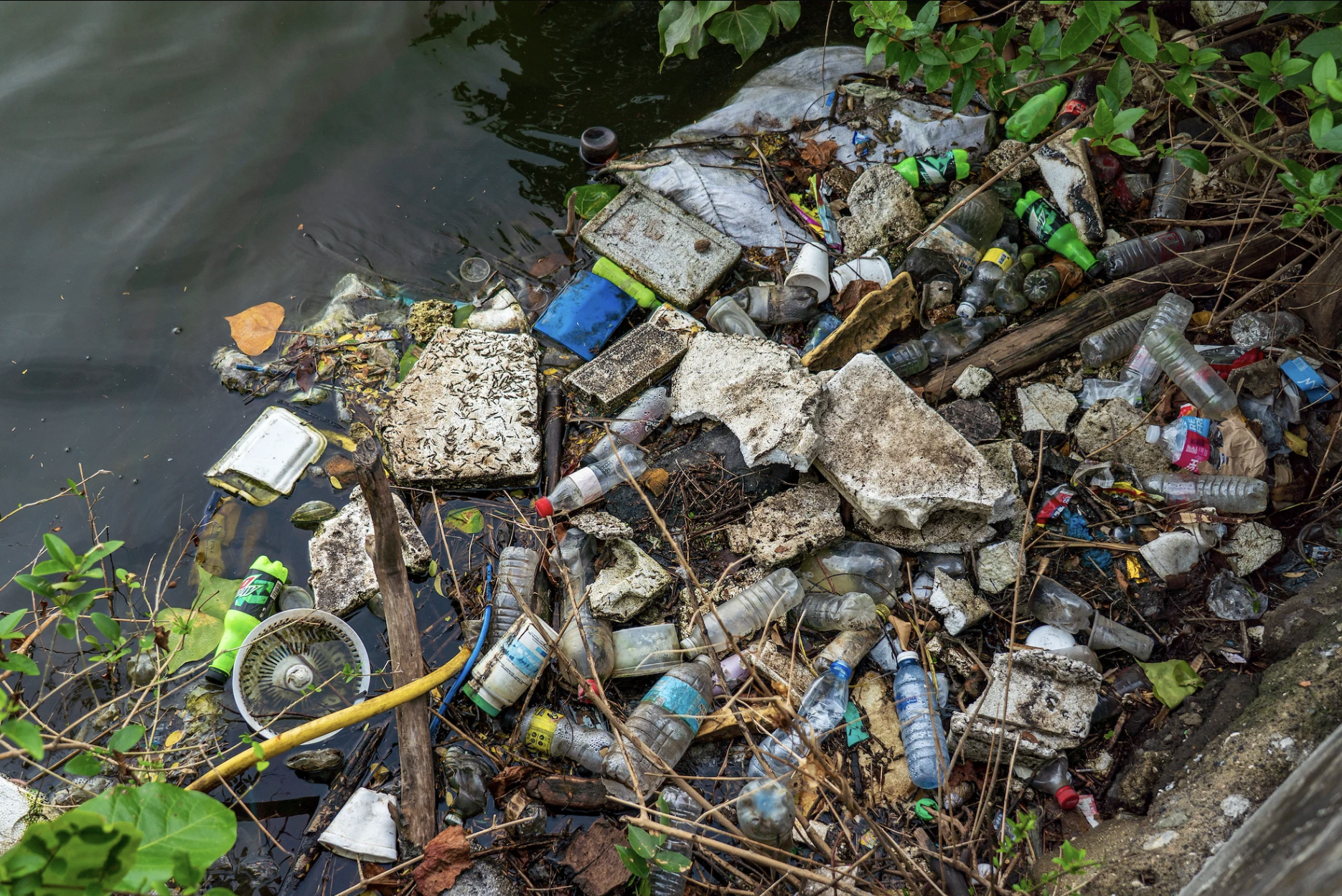
Cover photo by Orange Omengan/PEMSEA
As the world charts its course toward 2030, it does so amid mounting challenges—an ocean at a tipping point, ecosystems under increasing threat, and planetary crises that are converging with alarming speed and increasingly outpacing the commitments meant to address them.
The decade opened in crisis. The COVID-19 pandemic tested resilience and leadership in ways few had anticipated. Now, at the midpoint on the road to 2030, the stakes are higher, the risks more complex, and the need for strategic direction firmly anchored in preparedness and foresight more urgent than ever. In response, PEMSEA published the Status, Trends, and Transitions in Coastal and Ocean Governance and Ecosystems Amidst the Triple Planetary Crisis and Emerging Polycrisis, a strategic assessment geared toward anticipating and preparing for these complex and interconnected challenges.
As PEMSEA moves toward 2030, understanding the current status and emerging trends in coastal and ocean systems and governance has become critical. The report provides an integrated analysis of environmental, institutional, and socio-economic dynamics shaping the region’s development pathways. It examines key changes, developments, risks, and opportunities in the context of the triple planetary crisis and the evolving polycrises, while exploring both traditional and emerging blue economy sectors as drivers of resilience and sustainability. Drawing on evidence from global, regional, and national levels, the report serves as a compass for forward-looking, adaptive, and results-oriented planning toward the end of the decade.
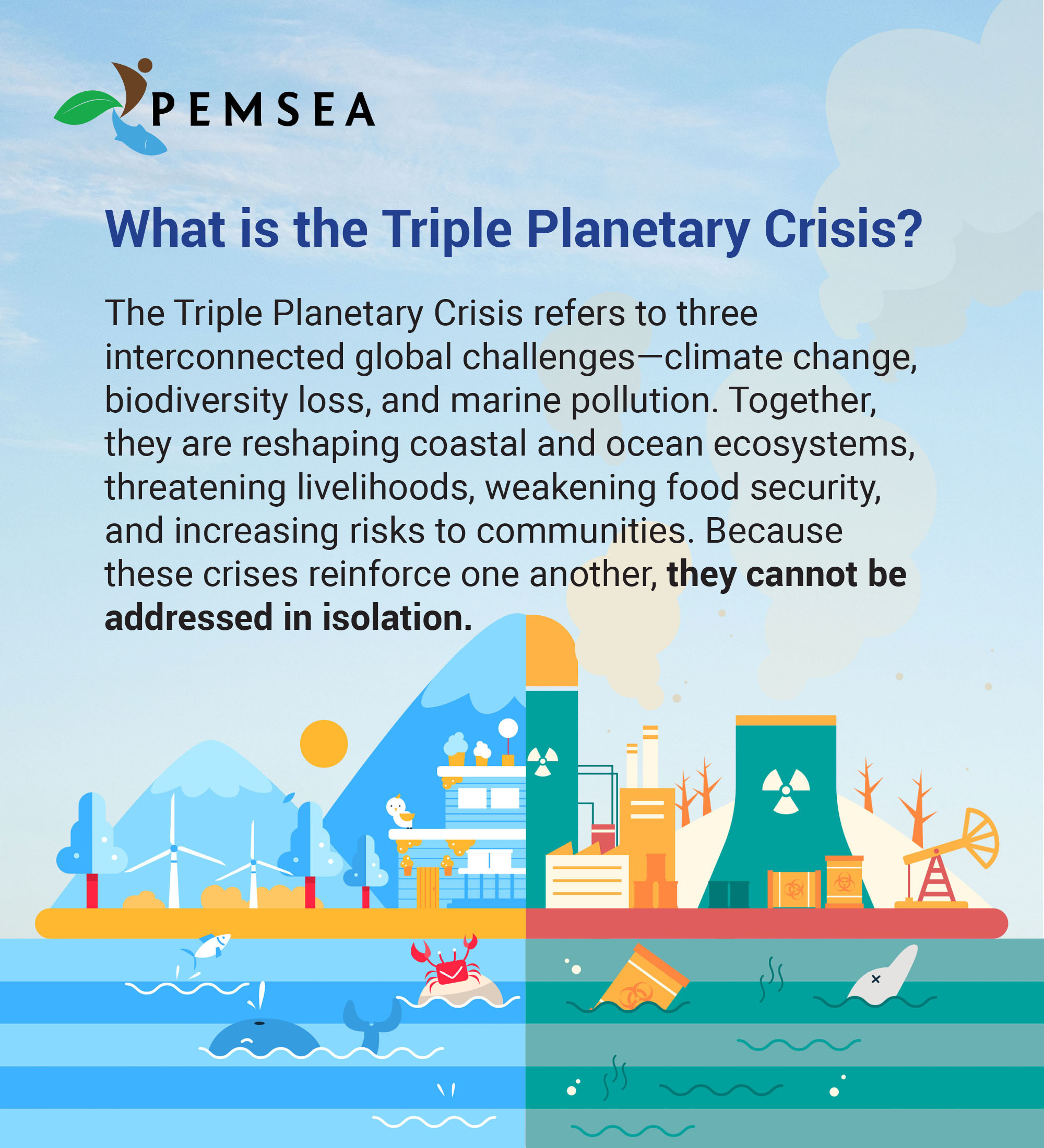
Climate change, biodiversity loss, and marine pollution — the Triple Planetary Crises (TPC) — are defining challenges of our time. Formally recognized by the United Nations Environment Programme in 2022, the TPC represents not merely a set of concurrent challenges, but a deeply interconnected system of threats that mutually amplify one another, eroding the ecological foundations upon which human well-being and economic stability depend.
The East Asian Seas (EAS) region, home to some of the world’s most ecologically rich and economically vital coastlines, stands at the epicenter of both the crisis and the response. Climate change is driving stronger typhoons, sea-level rise, ocean warming, and acidification, leading to coral bleaching events and threatening the safety and livelihoods of coastal communities. Biodiversity loss is accelerating as critical habitats such as mangrove forests and seagrass beds degrade, undermining their role as carbon sinks and natural coastal defenses. At the same time, marine pollution, particularly from land-based sources and plastics, compounds these threats, choking marine life and entering the food chain. Millions of people who depend on healthy oceans for their food and livelihoods are already feeling the consequences.
These crises do not operate in isolation. They intersect and reinforce one another, forming a broader polycrises marked by economic instability, food insecurity, and geopolitical tensions. As identified by the World Economic Forum, this convergence reflects four multi-decade structural forces reshaping the global risk landscape: technological acceleration, geostrategic shifts, demographic bifurcation, and climate change.
Climate Change
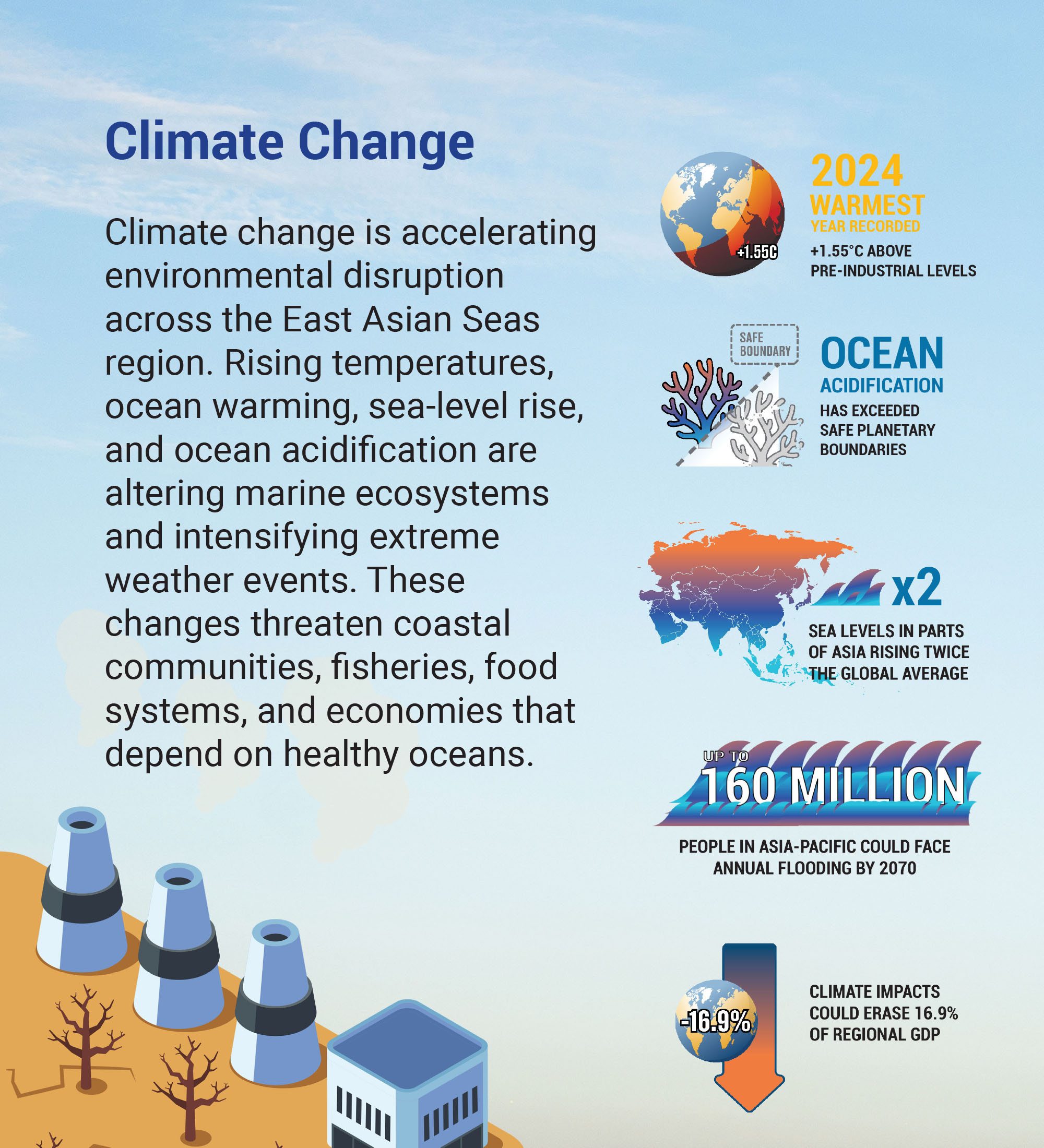
Climate change amplifies biodiversity loss and pollution, creating cascading socio-economic risks that cannot be addressed in isolation. Systematic monitoring of emissions, ocean health, vulnerability exposure, and economic impacts provides the evidence base for targeted adaptation, risk-informed investment, and policy reform.
The projections are stark. By 2070, up to 160 million people in Asia-Pacific could face annual flooding, while climate impacts could erase up to 16.9% of regional GDP. Sea-level rise in Southeast Asia could reach 0.70 meters by 2100, placing coastal communities, infrastructure, and ecosystems at heightened risk.
Accelerating mitigation and adaptation toward 2030 will be critical to reducing climate vulnerability and safeguarding regional development gains.
Climate Change
- 2024: Warmest year ever recorded (+1.55°C above pre-industrial levels)
- Ocean acidification has exceeded safe planetary boundaries
- Sea levels are rising twice the global average in parts of Asia
- Up to 160 million people in Asia-Pacific could face annual flooding by 2070
- Climate impacts could erase 16.9% of regional GDP
Marine Pollution
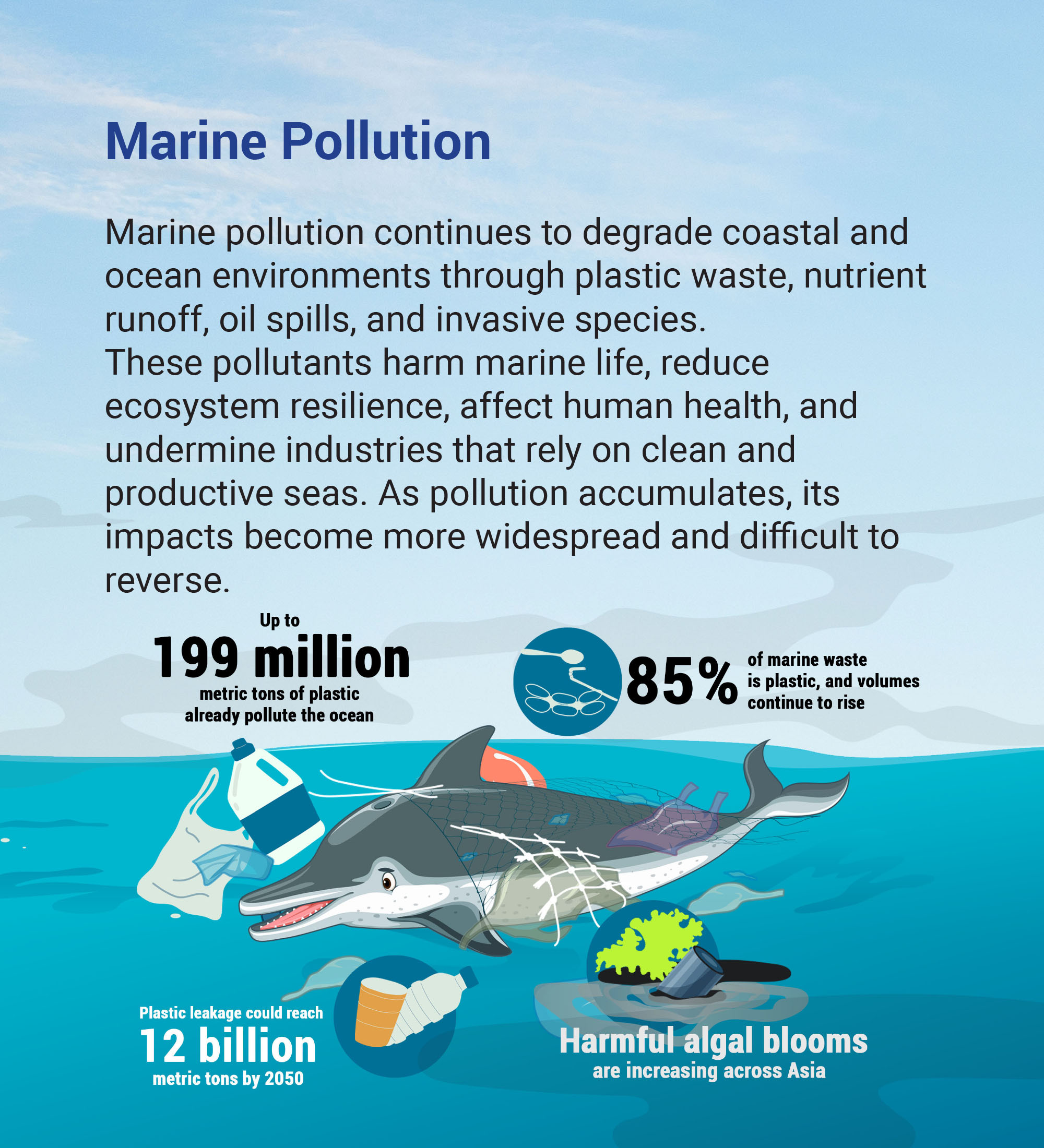
Marine pollution remains one of the most pervasive elements of the Triple Planetary Crisis (TPC), undermining ecosystem integrity, economic resilience, and human health. From visible plastic debris to invisible nutrient overload, and from catastrophic oil spills to the spread of invasive species through biofouling, for example, pressures on coastal and ocean systems continue to intensify. As 2030 approaches, the scale, complexity, and transboundary nature of marine pollution demand integrated, source-to-sea governance and strengthened monitoring systems.
Marine plastic litter is the most visible and widely recognized form of marine pollution. Plastics alone account for at least 85% of total marine waste, with an estimated 75–199 million metric tons already accumulated in the ocean (UNEP, 2021b). Southeast Asia generates approximately 31 million tons of plastic waste annually, with much of the leakage traced to mismanaged land-based waste entering more than 1,000 rivers. Approximately 80% of global marine plastic emissions originate primarily in Asia (Yu et al., 2023). Without systemic change, plastic leakage could triple by 2040 and reach up to 12 billion metric tons by 2050.
Nutrient pollution, though less visible, is accelerating coastal eutrophication. Excess nitrogen and phosphorus from agriculture, wastewater, and aquaculture are driving harmful algal blooms (HABs), oxygen depletion, and fisheries decline. Anthropogenic nitrogen inputs now dominate 46 of 63 Large Marine Ecosystems assessed (COBSEA, 2021). Fertilizer use has surged dramatically in recent decades, yet only 20% of applied nitrogen contributes to food production, with the remainder becoming pollution. In China, HAB frequency has increased by 40% per decade, while several Southeast Asian countries report rising toxic blooms and associated economic losses.
Oil spills and biofouling add further persistent pressure. In 2022 alone, approximately 15,000 tonnes of oil were lost to the marine environment globally (Chandel et al., 2024). In Southeast Asia, recent incidents have contaminated ecologically sensitive corridors, underscoring ongoing vulnerabilities. Meanwhile, biofouling—the accumulation of organisms on ship hulls and marine infrastructure—remains a significant vector for invasive species, threatening biodiversity, aquaculture, and coastal industries.
Marine Pollution
- 85% of marine waste is plastic, and volumes continue to rise
- Up to 199 million metric tons of plastic already pollute the ocean
- Plastic leakage could reach 12 billion metric tons by 2050
- 80% of agricultural nitrogen becomes pollution
- Harmful algal blooms are increasing across Asia
Marine pollution intersects directly with climate change and biodiversity loss, amplifying ecosystem degradation and socio-economic vulnerability. Plastics weaken coral resilience; eutrophication accelerates acidification and deoxygenation; oil spills and invasive species undermine fisheries and coastal livelihoods.
Marine Habitat and Biodiversity Loss
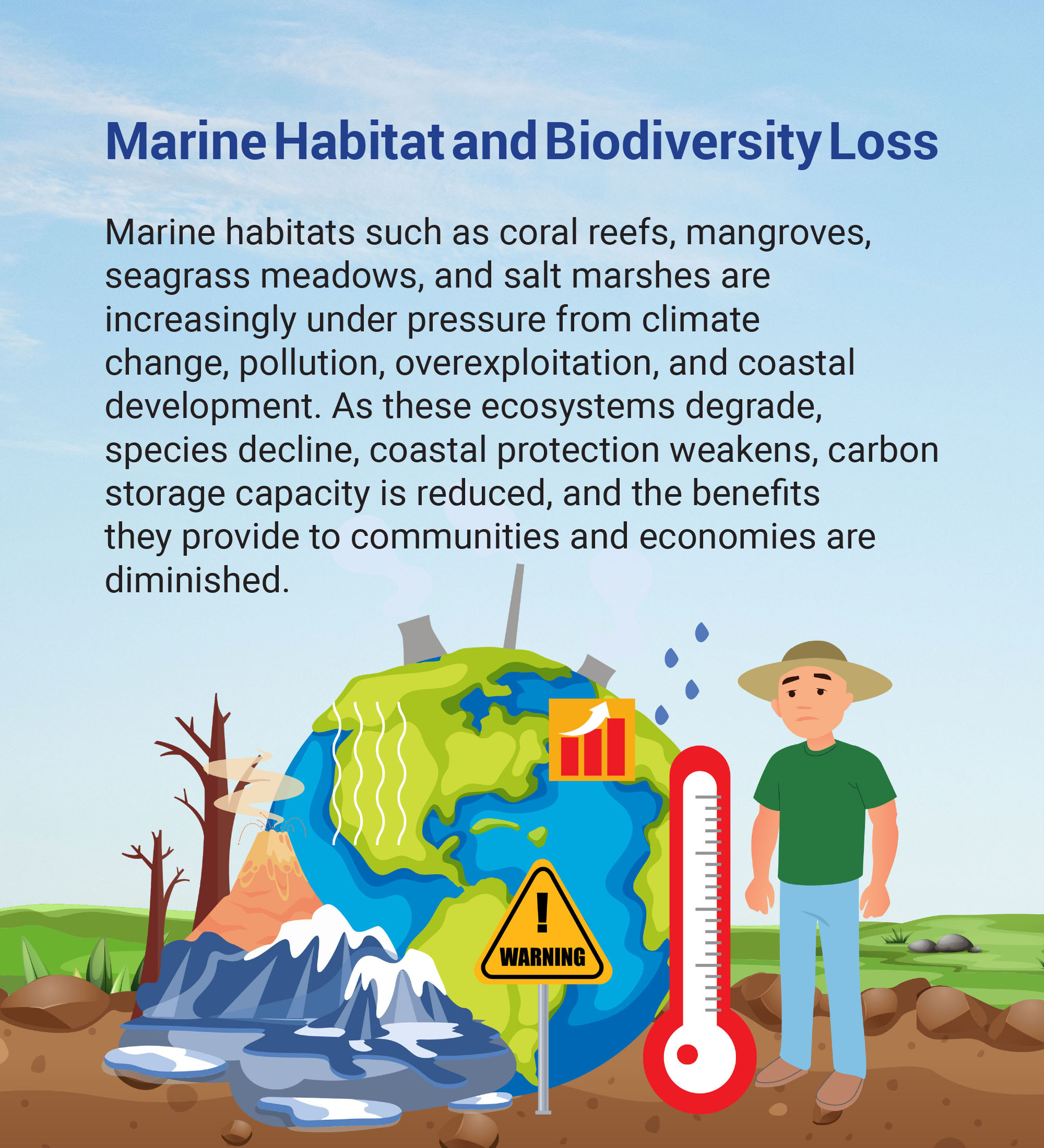
Despite their ecological and economic value, marine habitats and biodiversity across the East Asian Seas and globally are declining at alarming rates due to the converging impacts of climate change, overfishing, pollution, and coastal development.
More than 30% of marine species are threatened with extinction (IUCN), while global wildlife populations have declined by 69% since 1970 (WWF, 2022). In Southeast Asia, 59% of assessed sharks and rays face extinction, and reef-building coral species listed as threatened increased to 44% in 2024, up from 33% in 2008 (IUCN, 2024). Climate change—through warming, acidification, and sea-level rise—is emerging as a primary driver of habitat loss and species turnover, placing 2030 biodiversity targets at heightened risk.
Coastal blue carbon ecosystems are also under mounting pressure. Globally, mangroves covered 14.7 million hectares in 2020, with nearly 46% located in South and Southeast Asia, and Indonesia alone accounting for 20% of the global total. Yet Southeast Asia lost 245,700 hectares (4.85%) of mangroves between 1996 and 2020, with projected annual ecosystem service losses reaching US$2.2 billion by 2050 under business-as-usual scenarios.
Seagrasses have fared no better. Nearly one-third of global seagrass area has been lost since 1879, with current decline rates reaching 7% per year globally, and losses in Southeast Asia reaching up to 11% annually in some areas.
Coral reefs and salt marshes further illustrate the scale of risk. Coral reefs, covering less than 0.2% of the seafloor, support 25–30% of marine species and generate an estimated US$2.7 trillion annually in ecosystem services. Yet global coral cover declined by 13.5% between 2009 and 2018, and recent global bleaching events (2023–2025) have intensified stress across Southeast Asia. Meanwhile, 1,452.84 km² of salt marshes were lost globally between 2000 and 2019, at an annual loss rate of 0.28%, with limited regional monitoring data in East Asia.
Without accelerated climate mitigation and habitat protection, biodiversity losses are projected to intensify toward 2050 and beyond.
Marine Habitat and Biodiversity Loss
- More than 30% of marine species are at risk of extinction
- Global wildlife populations have declined by 69% since 1970
- Southeast Asia lost nearly 5% of its mangroves in 24 years
- Seagrass meadows are declining by 7% per year globally
- Coral reefs support 25–30% of marine life and generate US$2.7 trillion annually
Marine habitat and biodiversity loss is inseparable from climate change and pollution—the three pillars of the Triple Planetary Crisis. Degraded reefs reduce coastal protection; mangrove loss weakens carbon storage; seagrass decline diminishes fisheries productivity; and overfishing erodes ecosystem resilience.
Recent Articles
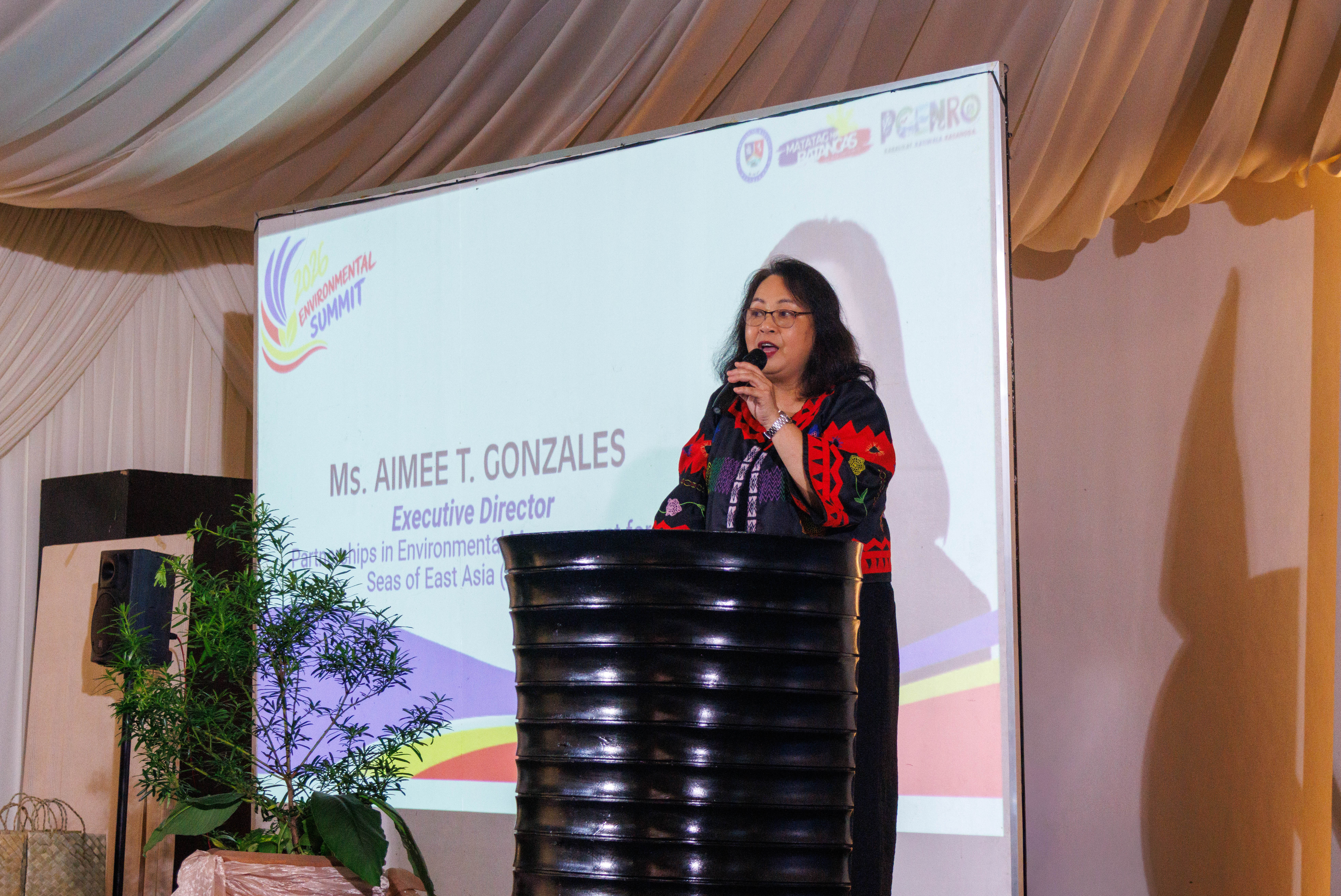
PEMSEA Recognized for Three Decades of Partnership with Batangas Province
Wednesday, 7 October 2026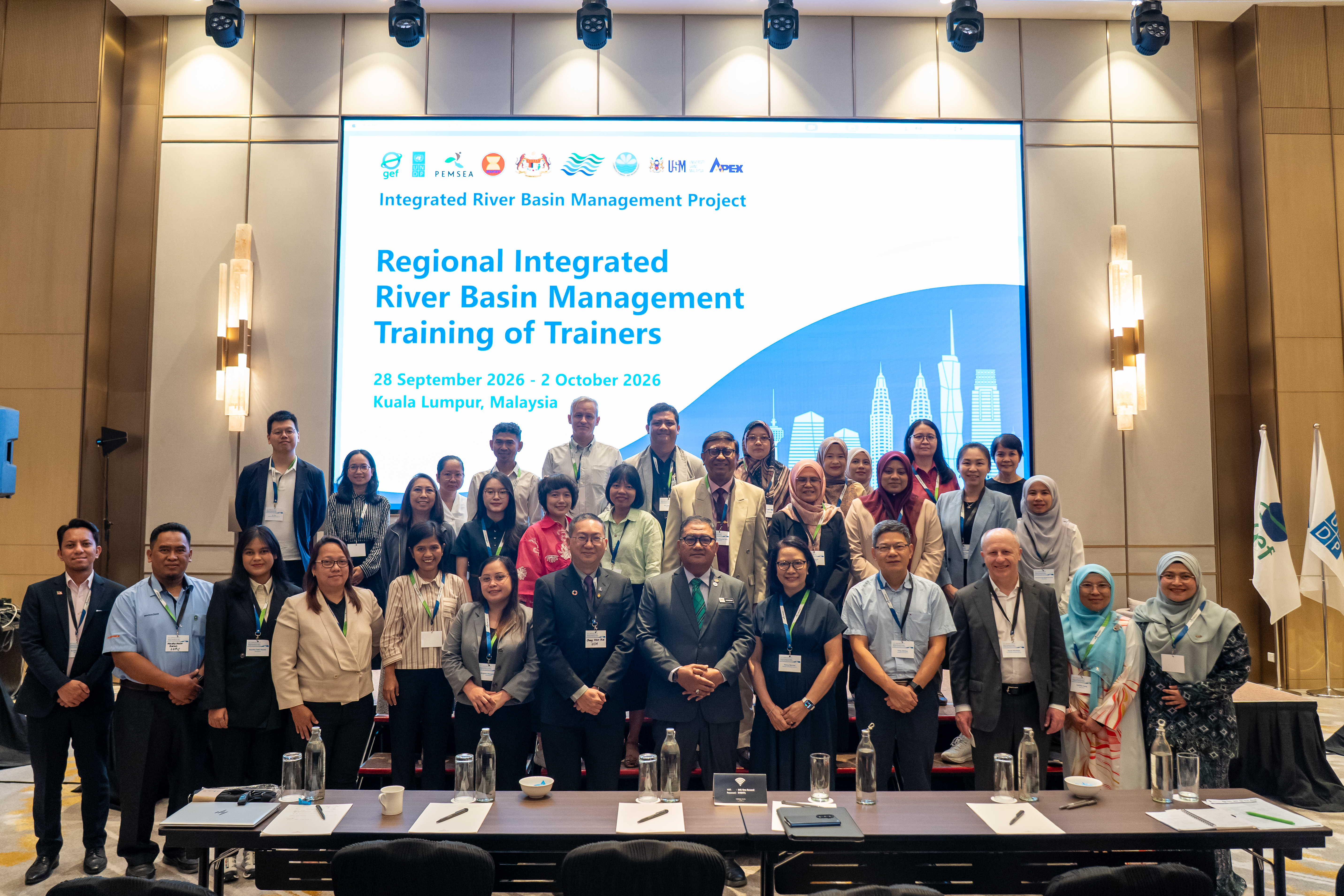
The GEF/UNDP/ASEAN IRBM Project Conducts the Regional Integrated River Basin Management Training of Trainers
Monday, 28 September 2026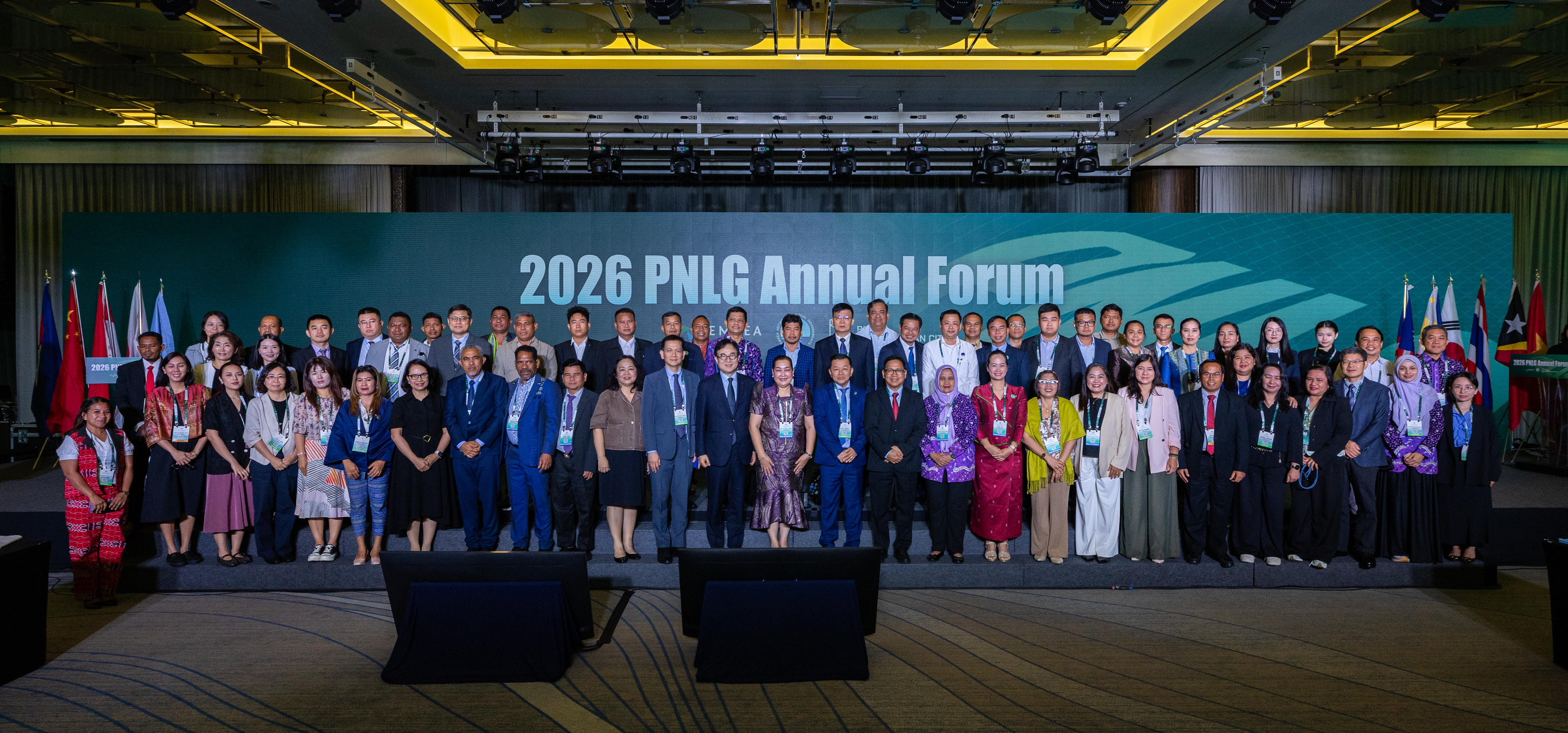
"Let This Forum Not Be Remembered for the Words We Spoke, but for the Actions We Inspire": PNLG President's Closing Message Calls for Action Beyond Busan, Republic of Korea
Monday, 21 September 2026
From north to south, local stakeholders convene to protect the Philippine Rise under the PRICELESS Project
Monday, 21 September 2026
PNLG General Assembly Adopts Busan Declaration, Welcomes Atauro Island as New Member
Wednesday, 9 September 2026