
PEMSEA Anchors High-Level Dialogue on Navigating the Triple Planetary Crisis at the 4th ASEAN Blue Economy Forum
Friday, 28 August 2026
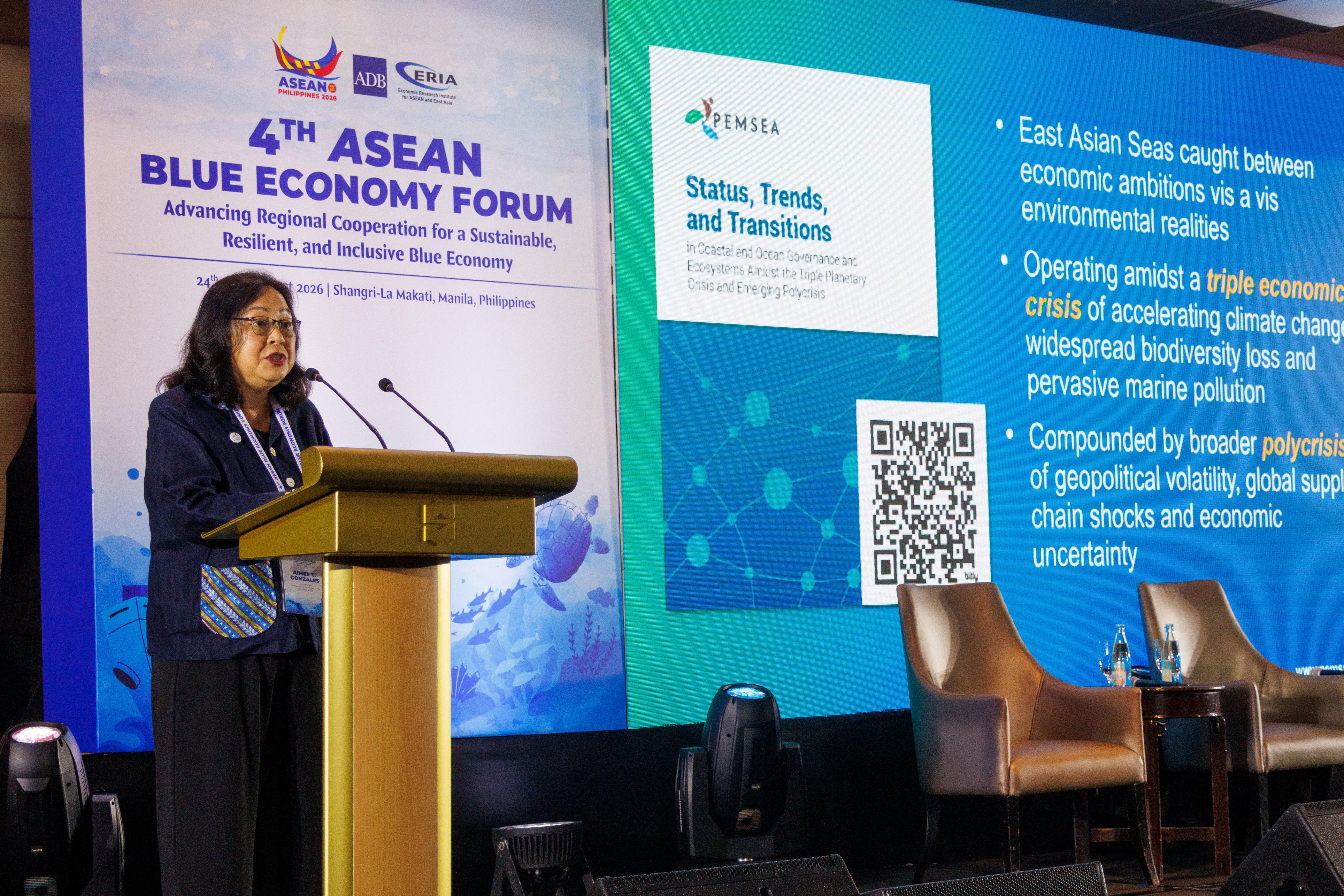
ASEAN’s blue economy faces growing pressures from environmental degradation, climate change, resource depletion, and wider economic and social disruptions. At the same time, its ocean and coastal assets offer major opportunities for investment, innovation, and sustainable growth.
These challenges and opportunities were the focus of the high-level opening plenary of the 4th ASEAN Blue Economy Forum in Makati City, Philippines, where PEMSEA Executive Director Aimee Gonzales opened the Forum with a presentation on the findings from PEMSEA’s flagship report, Status, Trends, and Transitions in Coastal and Ocean Governance and Ecosystems, setting the direction for the forum’s discussions.
Ms. Gonzales described the region as caught between rising economic demands and mounting pressure on its marine and coastal ecosystems:
"Our seas are no longer just a backdrop of Southeast Asia's historic growth, they are the dynamic center stage where our economic ambitions directly clash with environmental realities."
She emphasized the strategic value of ASEAN’s ocean assets as a source of resilience and future prosperity, outlining ways to turn current challenges into opportunities. These include expanding blue finance through green and blue bonds, blended finance, insurance-backed ecosystem protection, and emerging blue carbon markets.
Ms. Gonzales identified marine plastic pollution as an opportunity to develop new materials, livelihoods, and industrial value chains through a circular economy approach, while ecosystem restoration yields compound returns through fisheries, carbon sequestration, and storm protection.
She also highlighted digitalization and high-tech ocean monitoring as tools to improve transparency and cost-effectiveness, promoting an integrated source-to-sea governance model to prevent land-based pollution before it hits marine habitats.
“Every challenge conceals an equal opportunity.Transforming our coastal waste management into a regional circular economy turns a 6 billion annual loss from mismanaged plastic waste into new materials, jobs, and industrial value chains,”
“Investing in blue natural capital on our mangroves, our coral reefs, and seagrasses should not be a charity. It is a cost-effective infrastructure defense that yields compound returns in fisheries, carbon sequestration, and storm protection,” she added.
ASEAN’s Strategic Advantage
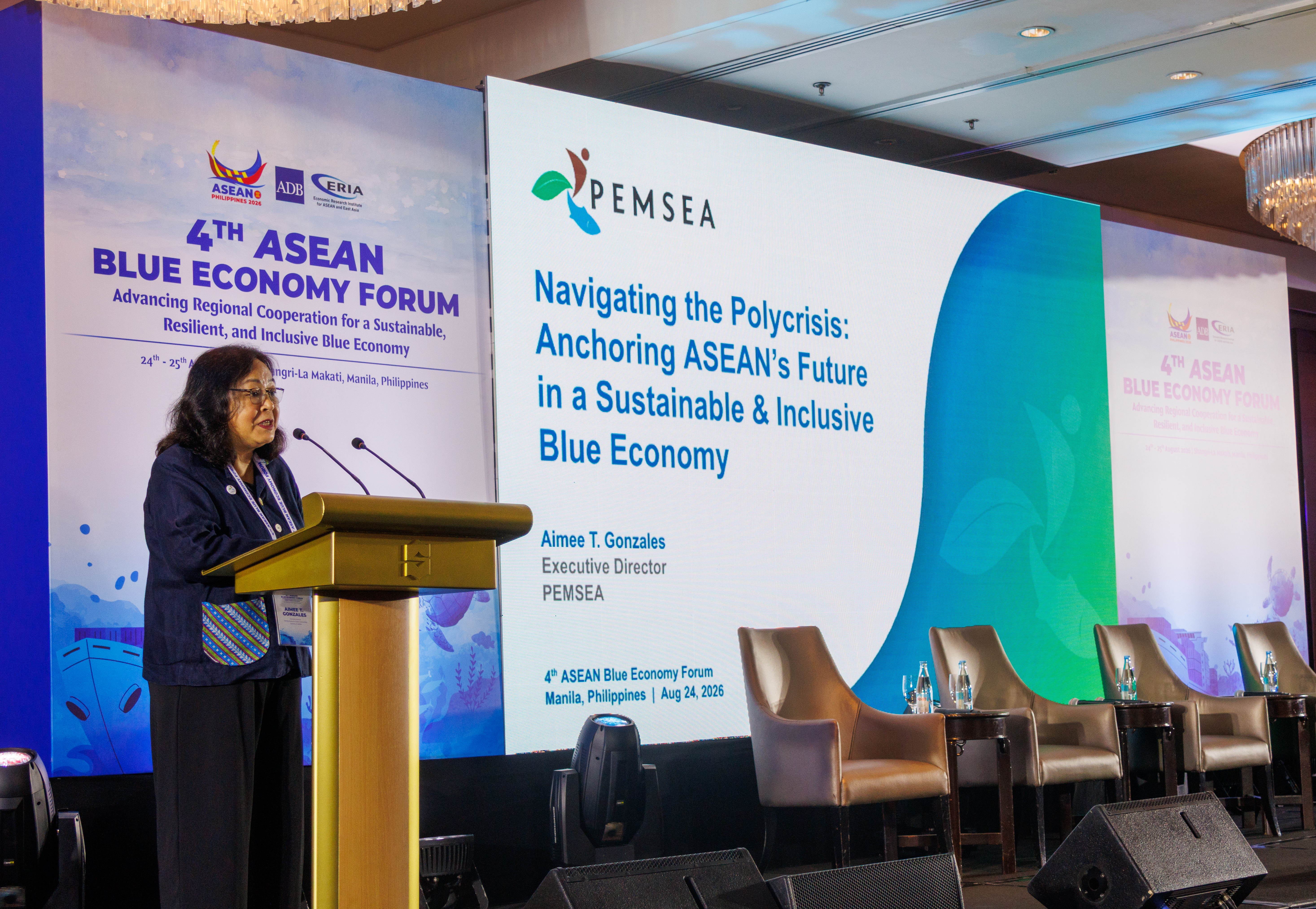
Ms. Gonzales identified ASEAN’s natural resources, strategic geography, and institutional frameworks and a strong tradition of regional cooperation and partnerships as key advantages in advancing the blue economy. The region serves as a global center of marine biodiversity, encompassing the Coral Triangle and critical maritime trade lanes connecting East and West.
However, she stressed that regional progress depends on empowering small-scale fishers, women, and youth to guarantee an equitable and inclusive transition.
"ASEAN is uniquely positioned to lead this transition to the blue economy. First, it has an ecological advantage. We are at the heart of global marine biodiversity, harboring the Coral Triangle and critical maritime trade lanes connecting East and West,” she said.
“Let me be emphatically clear on one point: a blue economy that boosts national GDP while displacing coastal fishers is not a sustainable blue economy. Macroindicators mean nothing to a coastal community if their local waters are depleted and their lands are inundated by sea level rise."
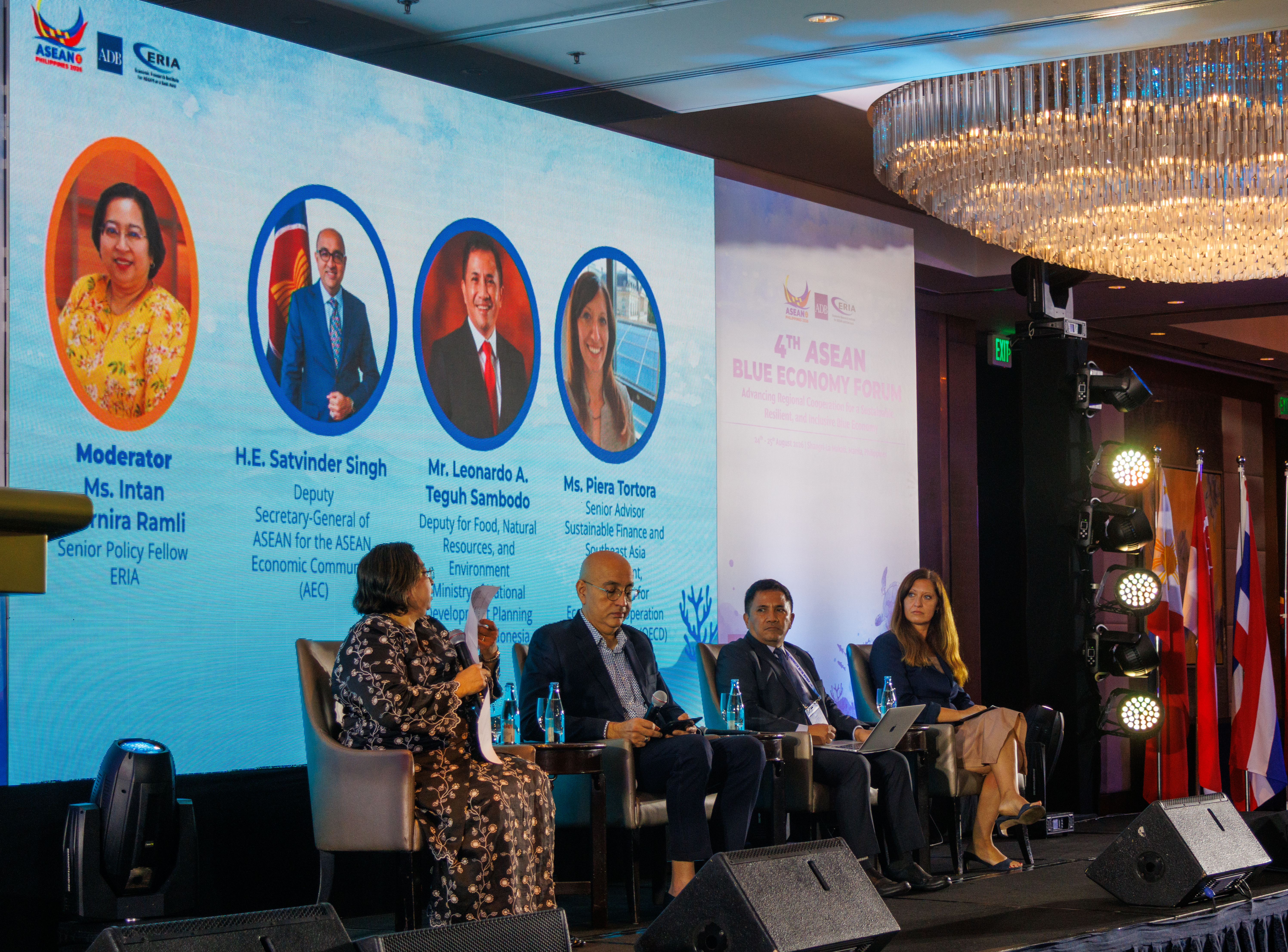
The presentation led into a panel discussion on moving from planning to implementation across the five blue economy outcomes. Participants included Satvinder Singh, Deputy Secretary-General of ASEAN for the ASEAN Economic Community at the ASEAN Secretariat; Leonardo A. A. Teguh Sambodo, Deputy for Food, Natural Resources, and Environment at Indonesia’s Ministry of National Development Planning (Bappenas); and Piera Tortora, Senior Advisor for Sustainable Finance and Southeast Asia Engagement at the Organisation for Economic Co-operation and Development (OECD).
From Vision to Implementation
The 4th ASEAN Blue Economy Forum is the first regional forum following adoption of the ASEAN Blue Economy Implementation Plan (2026–2030), marking a shift from policy development to implementation.
Adopted by ASEAN Leaders in 2023, the ASEAN Blue Economy Framework defines the blue economy as an integrated, holistic, cross-sectoral, and cross-stakeholder approach that creates value and value chains from ocean, sea, and freshwater resources in an inclusive and sustainable manner. The Implementation Plan provides a roadmap through five outcomes: financial capital, physical capital, human capital, social capital, and natural capital.
Held on 24-25 August 2026 at the Makati Shangri-La in the Philippines under the Philippines’ 2026 ASEAN Chairship, the Forum brings together ASEAN Member States, the ASEAN Secretariat, sectoral bodies, development partners, the private sector, civil society, academia, and policy organizations.
Under the theme “Advancing Regional Cooperation for a Sustainable, Resilient, and Inclusive Blue Economy,” the forum aims to provide strategic guidance, support implementation of the plan, and facilitate technical exchange and peer learning across the five outcomes.
The ASEAN forum is supported by the Asian Development Bank (ADB) and the Economic Research Institute for ASEAN and East Asia (ERIA) and the Philippine’s Department of Trade and Industry as host ministry.
Recent Articles
PEMSEA Recognized for Three Decades of Partnership with Batangas Province
Wednesday, 7 October 2026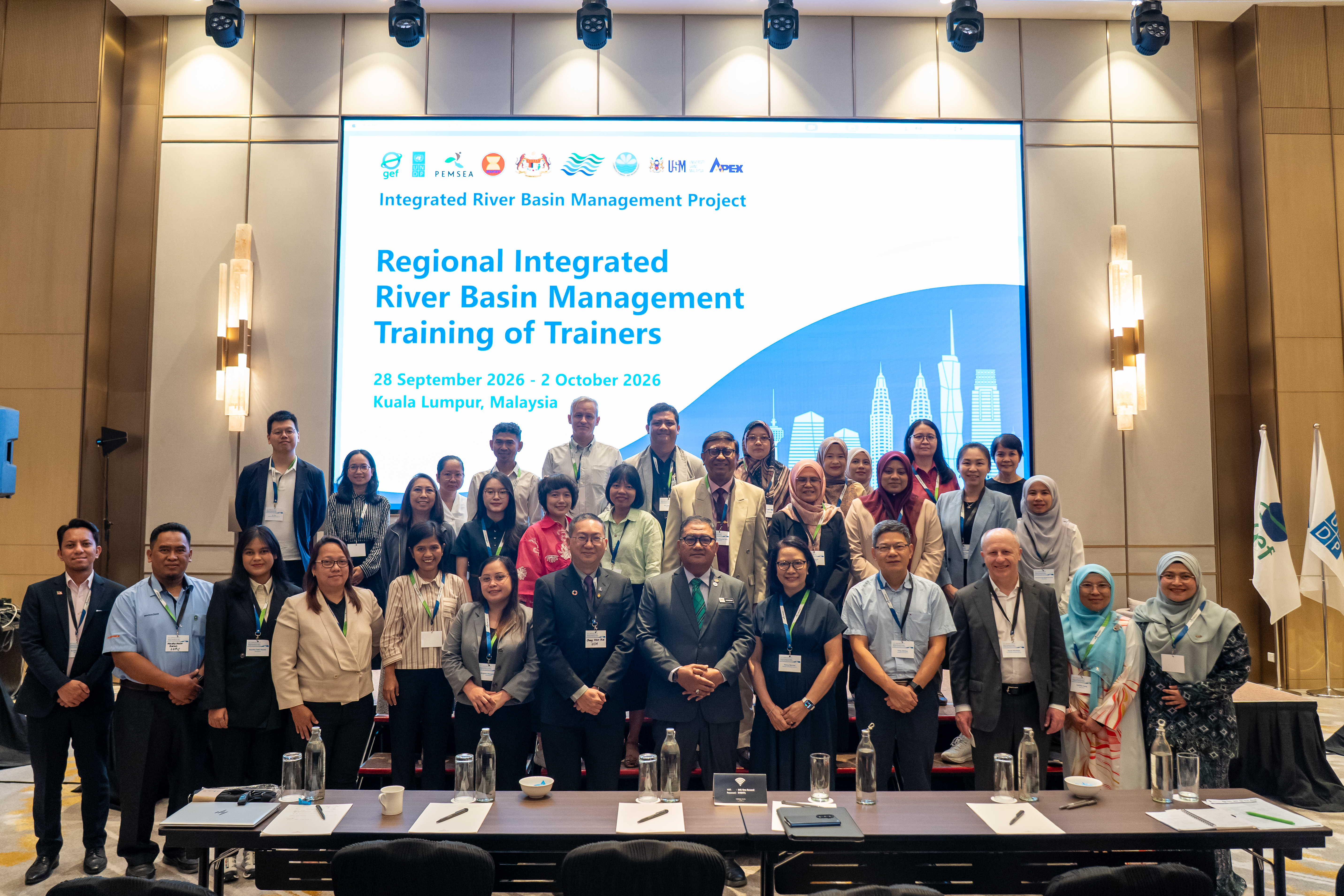
The GEF/UNDP/ASEAN IRBM Project Conducts the Regional Integrated River Basin Management Training of Trainers
Monday, 28 September 2026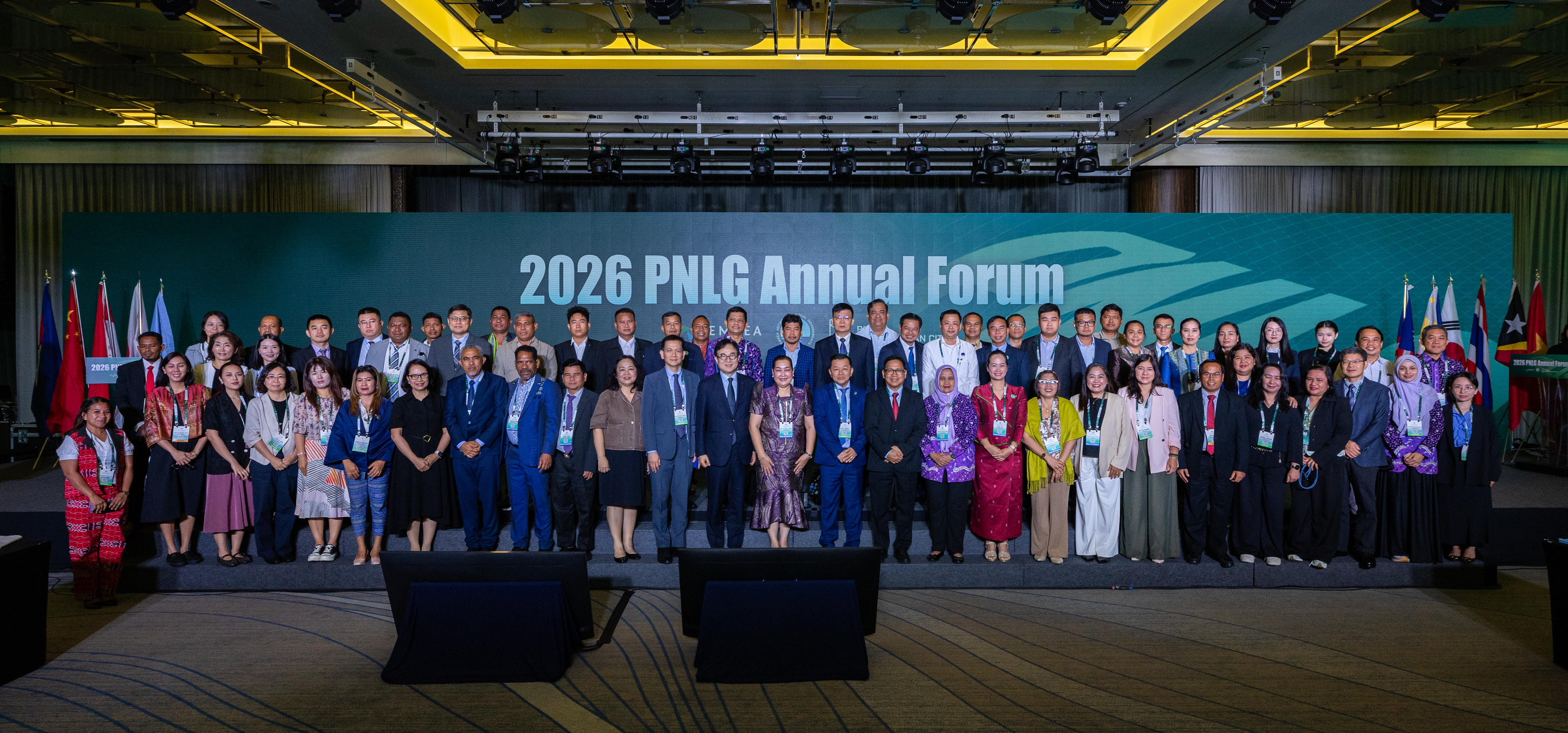
"Let This Forum Not Be Remembered for the Words We Spoke, but for the Actions We Inspire": PNLG President's Closing Message Calls for Action Beyond Busan, Republic of Korea
Monday, 21 September 2026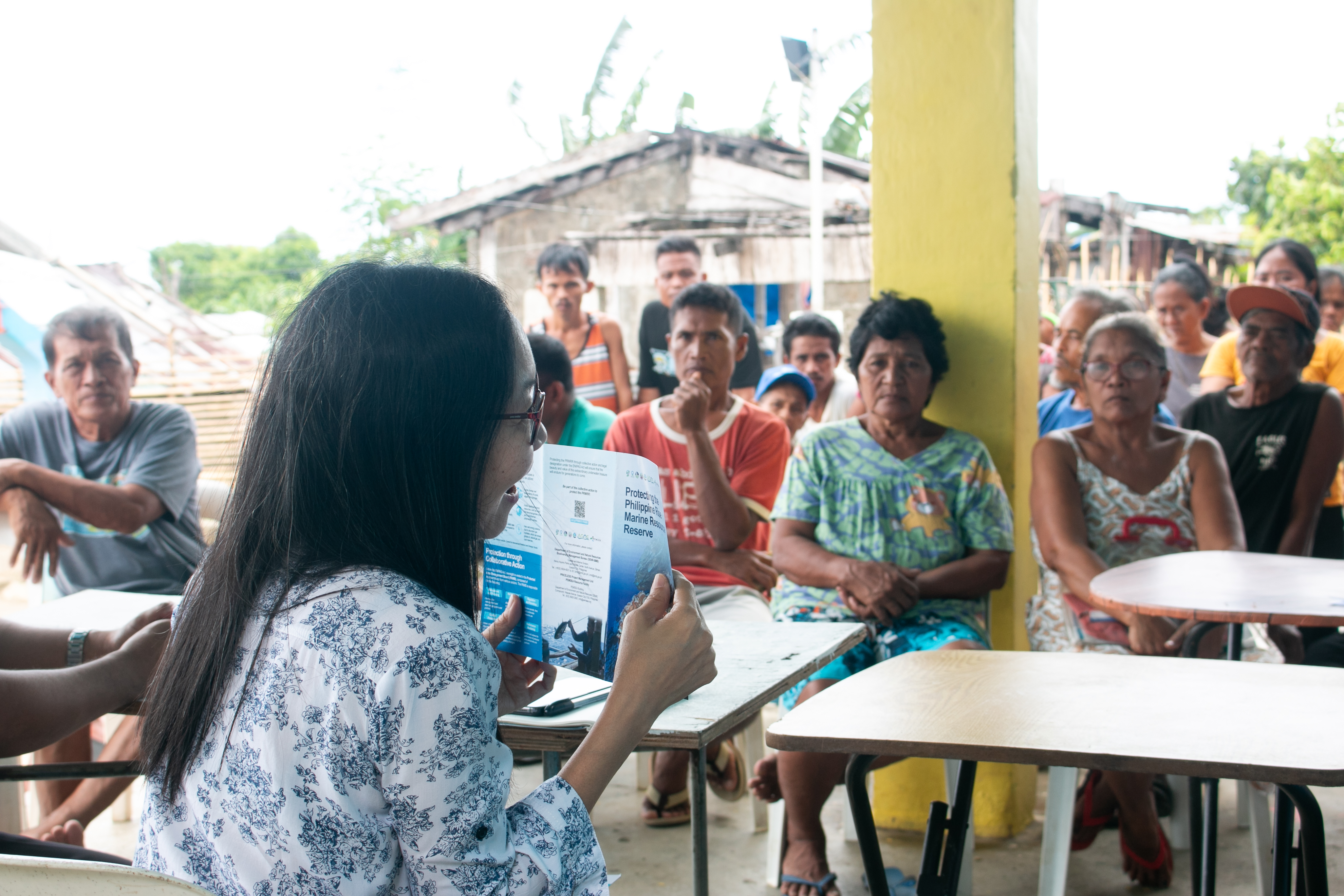
From north to south, local stakeholders convene to protect the Philippine Rise under the PRICELESS Project
Monday, 21 September 2026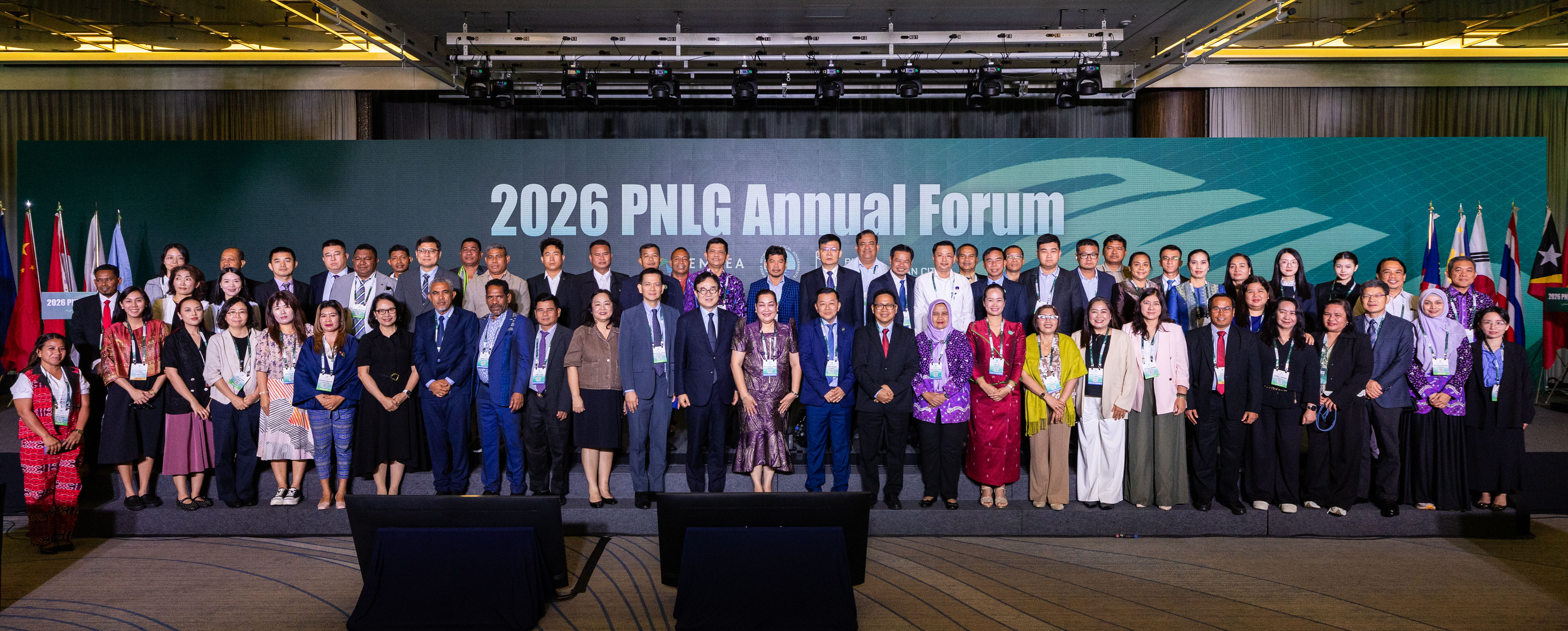
PNLG General Assembly Adopts Busan Declaration, Welcomes Atauro Island as New Member
Wednesday, 9 September 2026