Project Information
Implementing Agency: UNDP Bangkok Regional Hub
Executing Agency: PEMSEA Resource Facility
Funding Institution: Global Environment Facility
Participating ASEAN Member States: Cambodia, Indonesia, Lao PDR, Malaysia, Philippines and Vietnam
Project duration: 5 years (January 2023 to December 2027)
Project Grant: USD 8,479,123
Project Co-financing: USD 106,985,192
Spanning five years, the Integrated River Basin Management (IRBM) Project takes a comprehensive approach to protection and conservation, focusing on priority river basins in Cambodia, Indonesia, Lao PDR, Malaysia, the Philippines, and Vietnam. The project aims to reduce pollution, protect freshwater flows, and strengthen climate resilience.
This initiative influences four key large marine ecosystems—the Bay of Bengal, South China Sea, Gulf of Thailand, and Indonesian Sea—since the selected river basins in these countries drain into them. The project acknowledges the vital connection between river health, the well-being of marine environments, and the communities that rely on the resources that these critical bodies of water support.
The IRBM Project is supported by the Global Environment Facility (GEF), implemented by the United Nations Development Programme (UNDP) and executed by Partnerships in Environmental Management for the Seas of Asia (PEMSEA) Resource Facility, in collaboration with ASEAN.
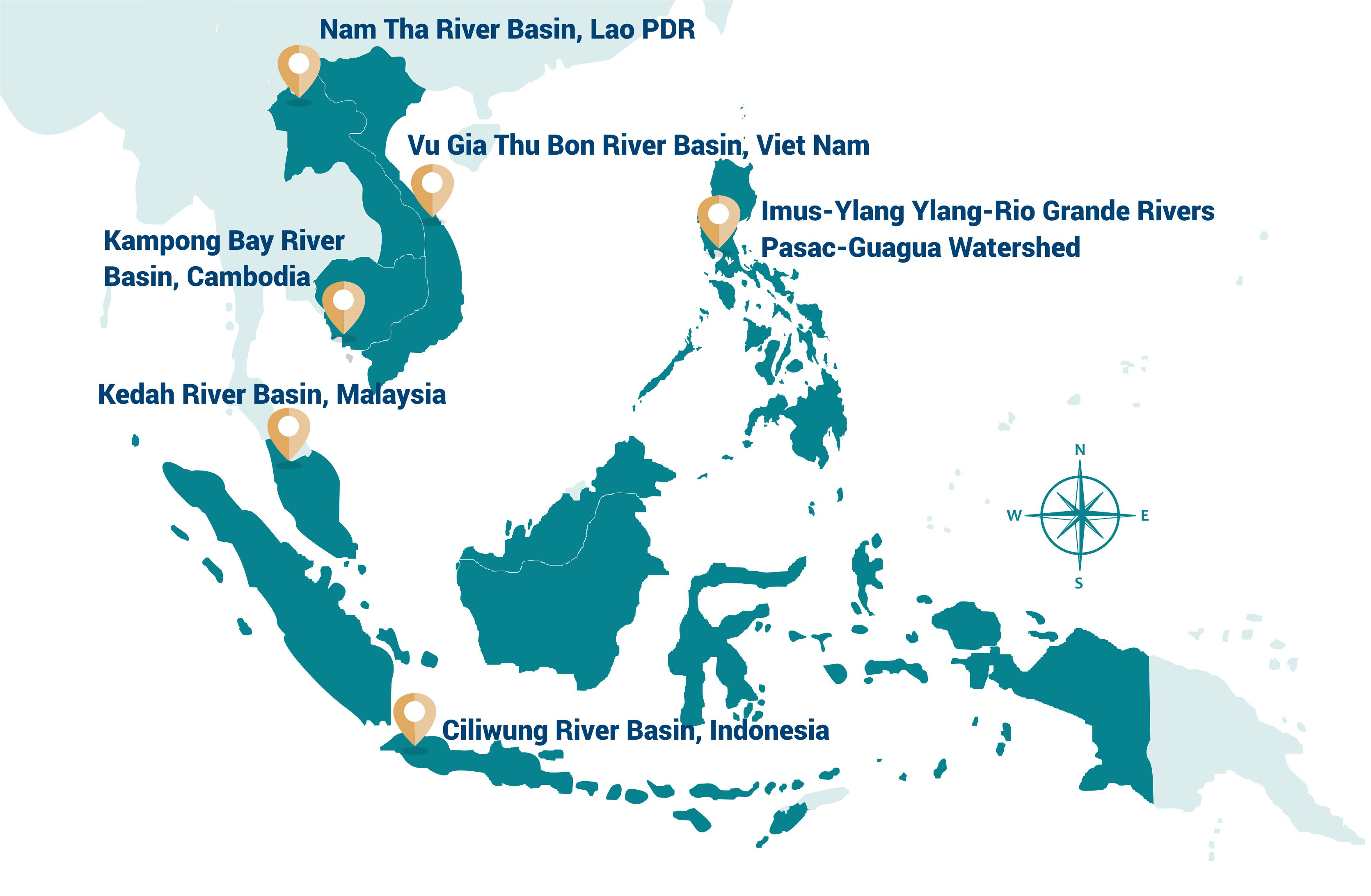
This graphic is not drawn to scale and is provided for illustration purposes only.
Project Goal
To establish functional IRBM mechanisms in the priority river basins of six ASEAN Member States to reduce pollution, sustain freshwater flows, and enhance resilience to climate change vulnerabilities
To achieve this goal, the project employs a solution-oriented approach that includes:
- Strengthening understanding of Source-to-Sea governance, socioeconomic and ecological conditions, while identifying gaps and needs in the seven priority river basins and their associated coastal areas
- Implementing pilot projects that deliver practical, on-the-ground solutions to address key issues, using tested models designed for replication and scaling up
- Facilitating hands-on training, capacity-building programs, and knowledge-sharing activities to support participatory planning and the development of effective IRBM governance and management practices across the six ASEAN countries.
Project Components
PROJECT OUTCOME 1:
Improved understanding of the situation and challenges in the river basins and surrounding areas:
- State of River Basin Reports
PROJECT OUTCOME 2:
Improved Source-to-Sea management demonstrated in the IRBM Pilot Projects:
- Feasibility studies, financial analyses, public consultations for preferred options for addressing IRBM challenges and formalizing the commitments to implement the pilot projects
IRBM governance mechanism and instruments refined:
- Good practices in IRBM governance and management
- Analysis of IRBM policies, strategies, laws, economic and financial instruments and partnership arrangements
- IRBM strategies and action plans
PROJECT OUTCOME 3:
Improved IRBM knowledge management and enabling capacities:
- Technical guide for a harmonized set of governance and management indicators
- Water quality monitoring and reporting
- Capacity building and skills on IRBM development and management
- Regional IRBM knowledge and communication management platform
- Regional and global forums, learning exchanges and networking
Project level monitoring and evaluation:
- Annual Project Implementation Review
- Independent mid-term and final evaluations
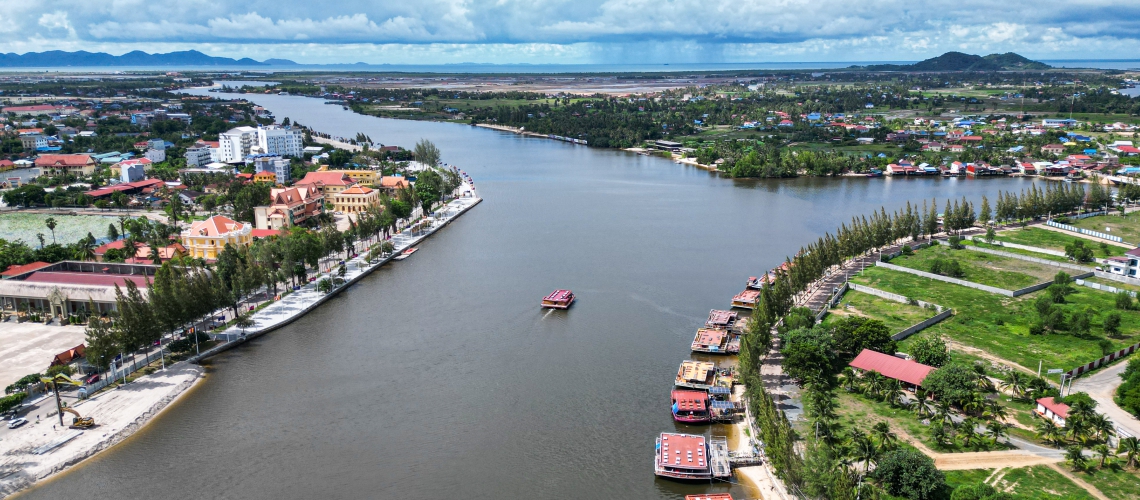
Project Publications
Proceedings of the Fourth RSC Meeting of the IRBM Project
The Fourth Regional Steering Committee (RSC) Meeting of the GEF/UNDP/ASEAN Project on Reducing Pollution and Preserving Environmental Flows in the East Asian Seas through the Implementation of Integrated River Basin Management (IRBM) in ASEAN countries was held on 08 July 2026 in Vientiane, Lao PDR, in conjunction with the 26th Meeting of the ASEAN Working Group on Water Resources Management (AWGWRM). Co-chaired by Mr. Oudomsack Philavong, AWGWRM Chairperson, and Mr. Gerd Trogemann of UNDP Bangkok Regional Hub, the meeting brought together 55 participants from ASEAN Member States (AMS), the ASEAN Secretariat, UNDP, PEMSEA Resource Facility (PRF), and the East Asian Seas Executive
Committee, both in-person and online.The Meeting reviewed implementation progress of the six participating ASEAN Member States and the regional component, including key achievements, lessons learned, implementation challenges, co-financing delivery, and planned next steps. The RSC also reviewed progress in implementing the approved Mid-Term Review (MTR) Management Response, the preparation of the 2026 Project Implementation Report (PIR), the planned activities for the third and fourth quarters of 2026, and the proposed 2027 Annual Work Plan and Budget, including the proposed no-cost extension of the Project.
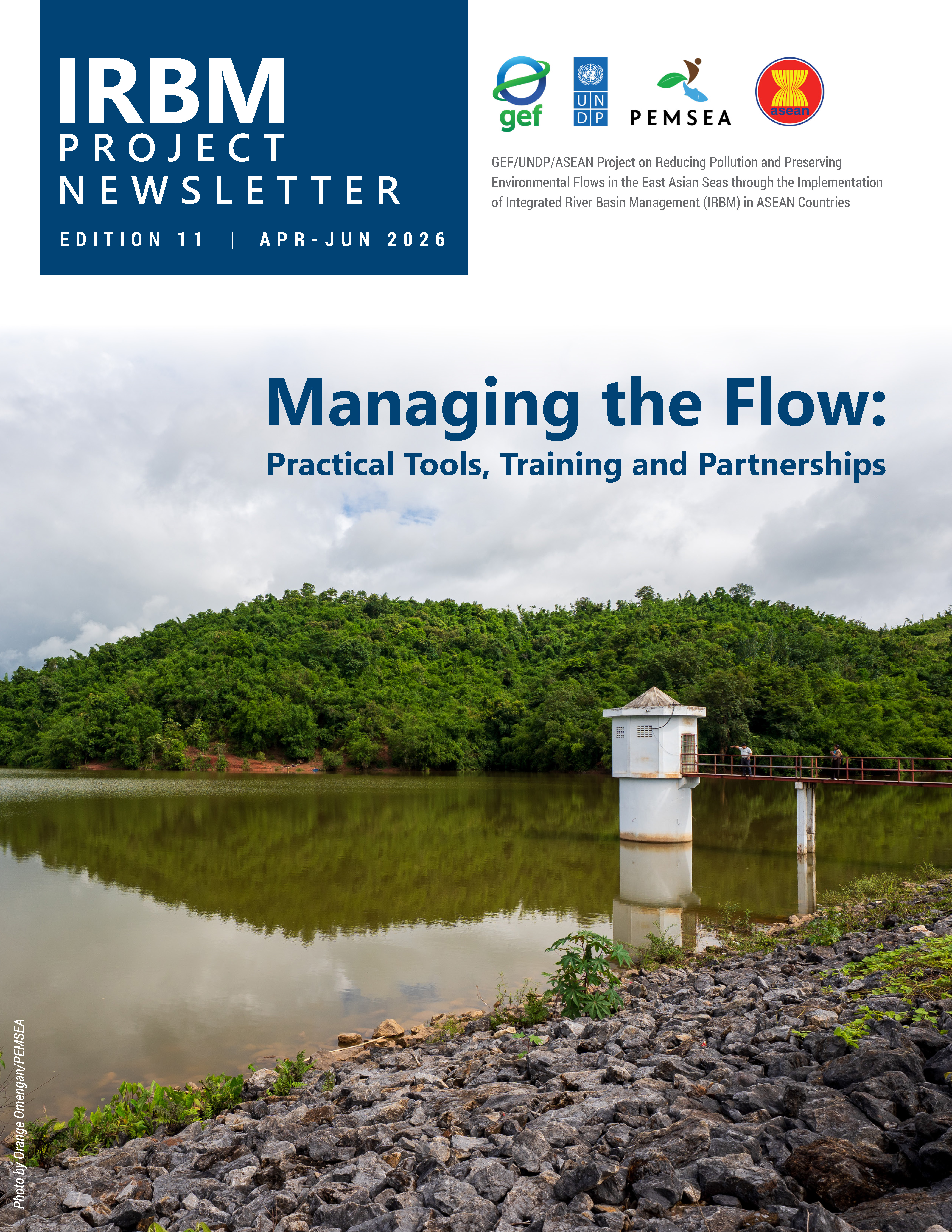
Integrated River Basin Management Project Newsletter - Edition 11
The second quarter of 2026 focused on technical capacity development, regional and global knowledge exchange, and basin-level implementation under the GEF/UNDP/ASEAN Integrated River Basin Management (IRBM) Project. Activities during the quarter included the Regional Training on the REWEFe Toolkit and Water–Energy–Food–Ecosystem (WEFE) Nexus Application; knowledge exchange on marine litter governance and Source-to-Sea cooperation; and the formalization of partnerships for Project implementation in the Kedah River Basin, Malaysia.
In April, representatives from the six ASEAN Member States participating in the Project took part in the hybrid Regional Training on the REWEFe Toolkit and WEFE Nexus Application, held in Manila, Philippines. Participants were introduced to the Project’s basin-level WEFE Nexus assessment and the REWEFe Toolkit comprising the User Manual and Guide. Through lectures, discussions, and hands-on exercises, they examined the governance and technical dimensions of applying the Toolkit, developed user-defined scenarios, and analyzed trade-offs and synergies across the WEFE nexus. The training also explored how scenario results can support cross-sector coordination and inform IRBM strategies and action plans, pilot project development, and stakeholder discussions at the river basin level.
Regional knowledge exchange continued in May through the PEMSEA Resource Facility’s participation in the International Summer Course on Marine Litter Management, Policy and Integrated Coastal Governance in the East Asian Seas Region, hosted by IPB University in Bogor, Indonesia. Ms. Nancy Bermas, Regional Project Manager of the IRBM Project, delivered a lecture on cross-country mapping of marine litter governance and management. She introduced PEMSEA’s Framework for Sustainable Development of Coastal and Marine Areas and presented the Manila Bay experience to illustrate how partnerships among governments, academic institutions, the private sector, development partners, civil society organizations, and communities can support coordinated responses to managing marine litter. She also discussed how the IRBM Project and the MOF/PEMSEA Marine Plastics Official Development Assistance (ODA) Project contribute to marine litter and plastic waste management.
Also in May, the Project shared its experience in applying the Source-to-Sea approach during the webinar, Source-to-Sea Cooperation: Practical Guidance for Implementation in Transboundary Basins, jointly organized by GEF IW:LEARN and the Secretariat of the UN Water Convention at UNECE. During the practitioner panel, Ms. Bermas explained how the IW:LEARN guidance has informed the Project from concept and project development through implementation, monitoring, evaluation, and learning. She highlighted its application in identifying priority flows and basin hotspots; conducting stakeholder mapping and governance baseline assessments; strengthening multisectoral and interagency river basin mechanisms; developing and implementing pilot projects to address the priority flows; and establishing monitoring, evaluation, and learning systems, including indicator-based State of River Basin Reports. She also emphasized the need for more on-the-ground examples showing how integrated river basin management, integrated coastal management, and marine protected area networks can be linked through the broader Sourceto- Sea framework.
In June, the Project officially launched implementation in the Kedah River Basin following the signing of a Memorandum of Agreement between the Universiti Sains Malaysia and the PEMSEA Resource Facility and a Memorandum of Understanding among the Department of Irrigation and Drainage Malaysia, the Kedah State Water Resources Board, and Universiti Sains Malaysia. The agreements formalized partnerships to strengthen the coordinating mechanism for IRBM implementation, undertake a baseline assessment of the river basin and associated coastal areas of Kedah State, and prepare a State of River Basin Report and IRBM Strategic Action Plan. The Project will also support the development and implementation of pilot projects addressing priority concerns, including flooding, declining water quality, and sedimentation.
This edition also features a closer look at the Project’s WEFE Nexus assessment, and the application of the REWEFe Toolkit supported by a User Manual and Guide. The feature explains how these resources contribute to understanding basin conditions, assessing future scenarios, and informing IRBM strategies, action plans, and potential interventions across the seven priority river basins.
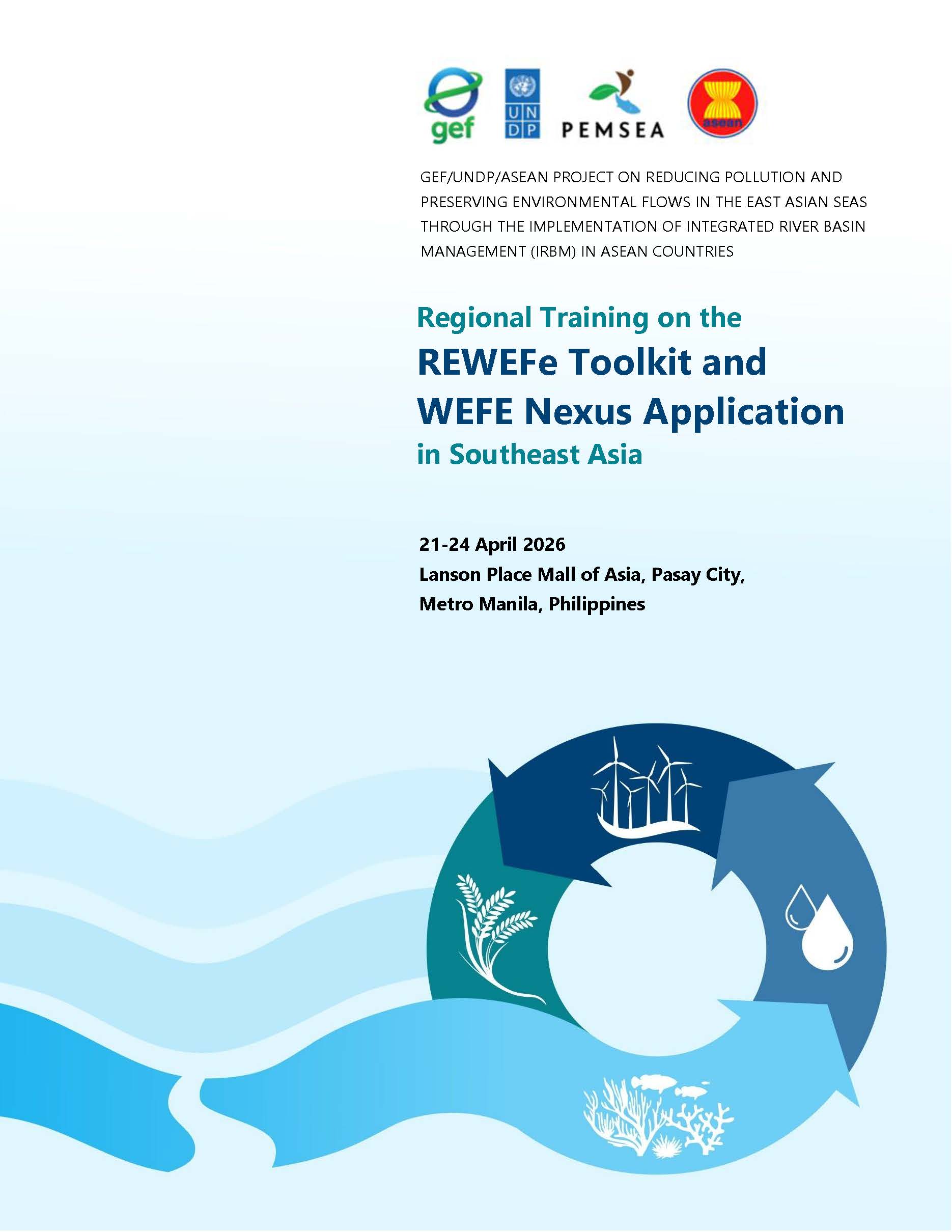
Regional Training on the REWEFe Toolkit and WEFE Nexus Application in Southeast Asia
The GEF/UNDP/ASEAN Project on Reducing Pollution and Preserving Environmental Flows in the East Asian Seas through the Implementation of Integrated River Basin Management (IRBM) in ASEAN Countries through the Regional Project Management Unit (RPMU) of PEMSEA Resource Facility (PRF) organized a Regional Training on the Rapid Evaluation of the Water, Energy, Food and Ecosystem (REWEFe) Toolkit and Water, Energy, Food and Ecosystem (WEFE) Nexus Application in Southeast Asia on April 21-24, 2026 in Manila, Philippines, in collaboration with FutureWater.
The IRBM Project is being implemented by PRF and aims to establish functional IRBM mechanisms to reduce pollution, sustain freshwater environmental flows, and adapt to climate change across seven priority river basins in Cambodia, Indonesia, Lao PDR, Malaysia, Philippines, and Viet Nam.
The REWEFe toolkit was developed by FutureWater and tailored to meet the specific needs of the IRBM Project and the Southeast Asian region WEFE Nexus context. Following its successful demonstration in three priority river basins of the IRBM Project, a need for regional capacity building was identified to support broader uptake of the toolkit within sound IRBM governance processes. This training represented a key milestone in that capacity building effort.
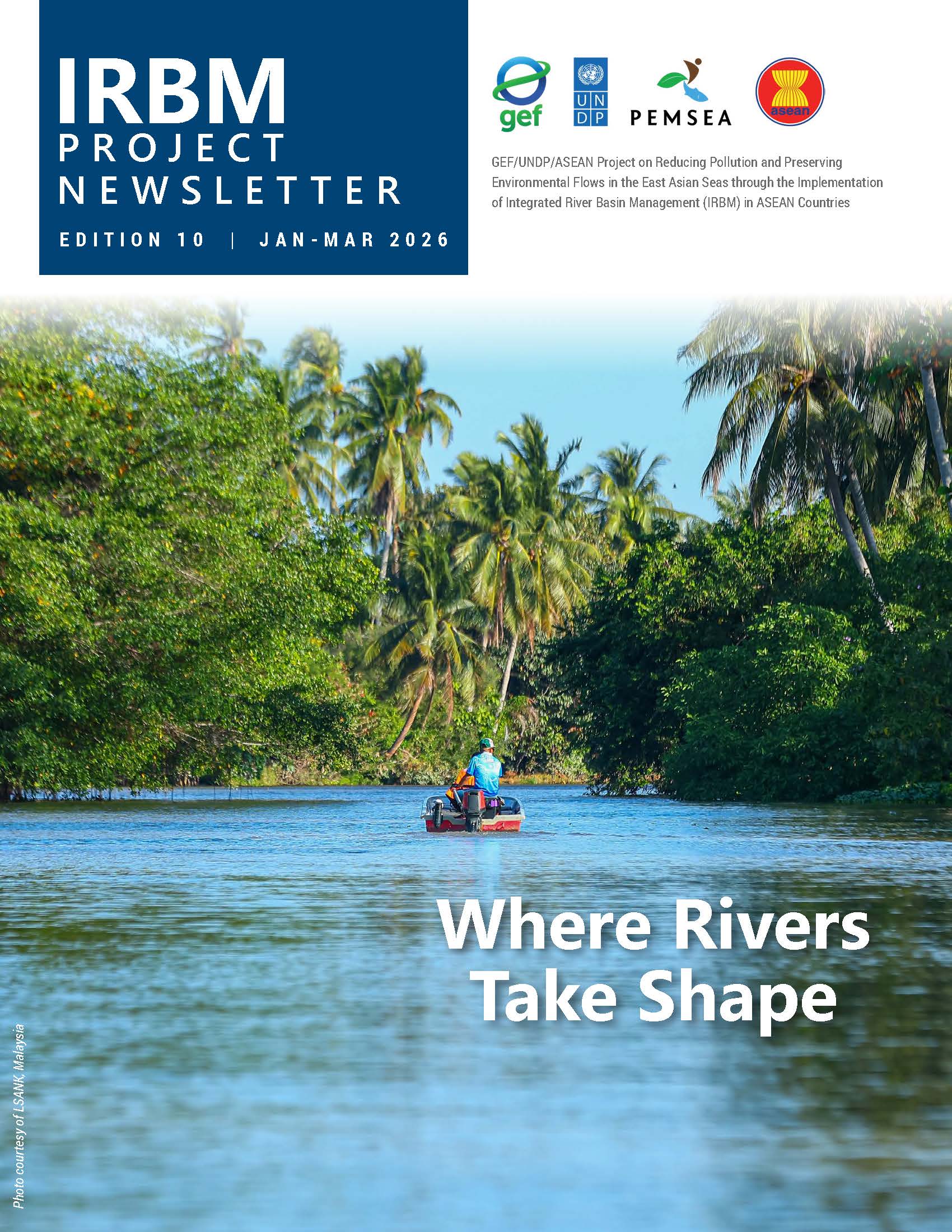
Integrated River Basin Management Project Newsletter - Edition 10
The first quarter of 2026 marked a period of strengthened coordination and forward planning for the GEF/UNDP/ASEAN Integrated River Basin Management (IRBM) Project, as participating ASEAN Member States and partners continued to build on institutional arrangements at national level and advance pilot interventions at basin level. These shared efforts were shaped by closer inter-agency collaboration, alignment of strategies, and a growing emphasis on translating plans into practical, site-based solutions.
In the Philippines, a key activity was the convening of the Organizational Meeting of the Project Steering Committee (PSC) in January, bringing together representatives from national government agencies to guide project implementation. The meeting clarified the governance structures, including the roles of the PSC, Inter-agency Technical Working Group, and Project Management Unit, while also reviewing and approving the 2026 workplan and budget. Discussions underscored the importance of harmonizing existing plans and programs across agencies to support integrated river basin and water resources management, particularly in the Project’s sites in Cavite and Pampanga.
At the basin level, coordination was further strengthened through a February meeting in Pampanga with the local government and the Department of Environment and Natural Resources for project implementation in Pasac–Guagua Watershed. The discussions provided updates on project implementation, revisited institutional arrangements, and identified priority directions for pilot project development. A notable shift emerged in the exploration of solutions, with stakeholders considering strategies to address solid waste—particularly food waste management—based on data showing that biodegradable waste comprises a significant share of total waste generated in the province. This reflects a more integrated and context-specific approach to address river basin challenges.
In March, the Project continued to support technical discussions on solid waste management through its participation in consultations in Da Nang, Viet Nam, where national and international partners examined priority concerns such as waste segregation, recycling systems, and the environmental impacts of landfill operations. Site visits further informed the identification of technical assistance needs and highlighted opportunities for innovation, including digital monitoring systems and alternative waste treatment solutions, where the Project could contribute.
In Cavite, Philippines, the Project participated in the review and updating of the 10-year Action Plan for the Imus-Ylang Ylang-Rio Grande Rivers (IYRR) Water Quality Management Area (WQMA), which brought together stakeholders to assess progress, identify gaps, and update strategies for improved river basin management. In support to the IYRR Action Plan and as part of pilot project development, the Project conducted the review of two feasibility studies commissioned by the DENR Environmental Management Bureau Region IV-A for the proposed wastewater and/or sewerage/septage treatment system in three river basins in Cavite Province and the Local Water Utilities Administration for the identification of concept designs for sanitation projects in the Municipality of Amadeo. The results were presented to the 1st Quarter 2026 Governing Board meeting of the IYRR WQMA. The IYYR WQMA Governing Board agreed to issue a resolution on the proposed establishment of septage treatment plant (STP) in the Municipality of Amadeo marking a key step toward advancing pilot project implementation under the IRBM Project.Collectively, the activities of the quarter reflect how these shared currents are beginning to take shape—grounded in strengthened partnerships and a clearer focus on practical solutions. This edition also features a profile story from Kedah River Basin in Malaysia, highlighting the experiences of women and communities whose livelihoods are closely tied to the river. Their stories underscore the vital role of women in sustaining water resources and shaping more inclusive and resilient approaches to river basin management.
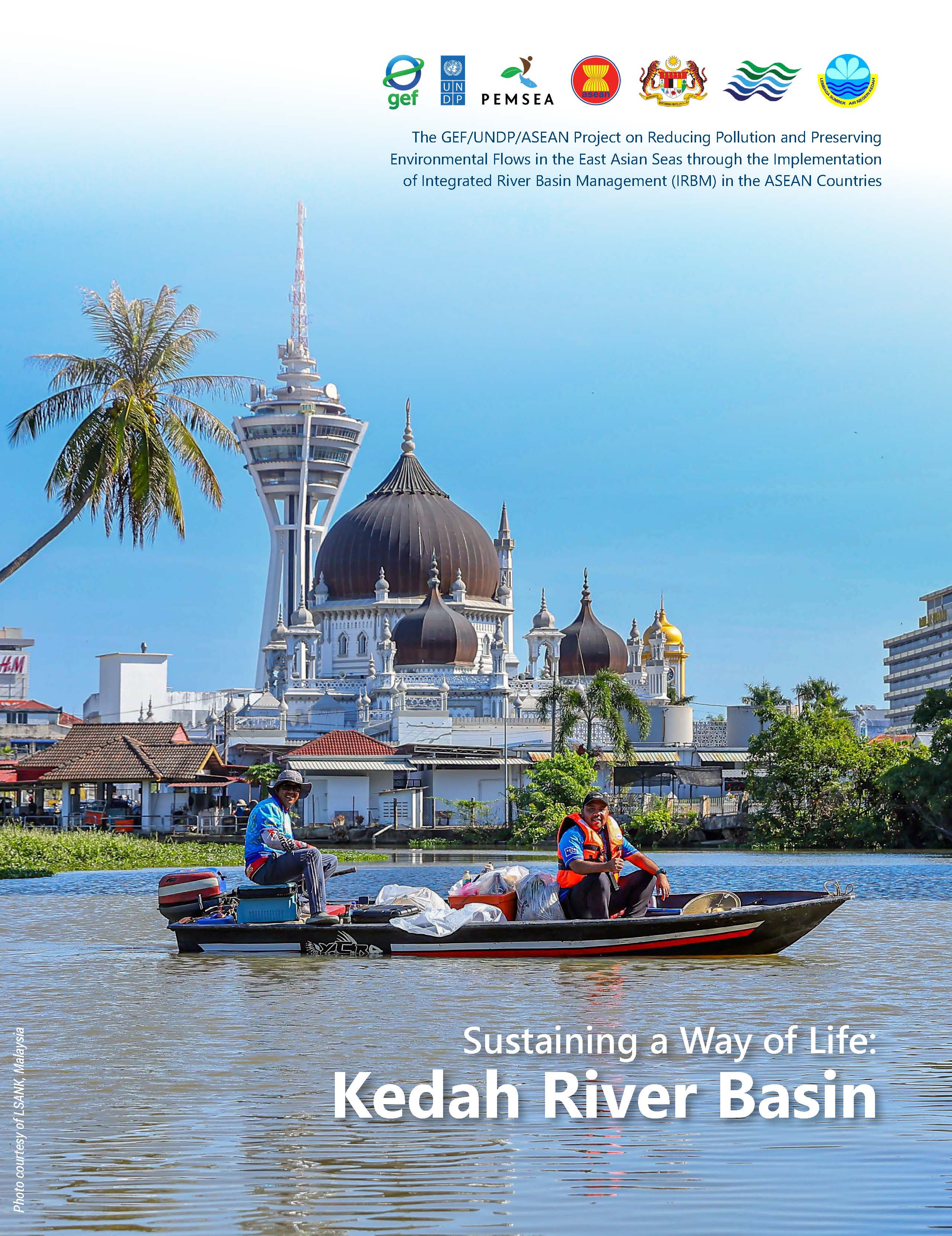
IRBM Stories - Sustaining a Way of Life: Kedah River Basin
In Kedah, Malaysia, fishing guides, rice farmers, women food entrepreneurs, river associations, and government partners are working together to sustain Sungai Kedah — the Kedah River — from its forested headwaters in Ulu Muda to the rice plains below. Along its course, communities depend on regulated flows for paddy cultivation, inland fisheries, river-based enterprise, and food traditions that have long shaped Kedah’s identity as the nation’s rice bowl.
Monsoon floods, sedimentation, and pollution place increasing pressure on the basin. Along the river, local groups practice catch-and-release fishing, organize clean-ups, and build enterprises rooted in its waters. At the same time, coordination among state and national agencies — through a Source-to-Sea approach that advances integrated river basin management and governance — is deepening shared responsibility across the basin.
Read more about the Kedah River Basin profile.